Introduction
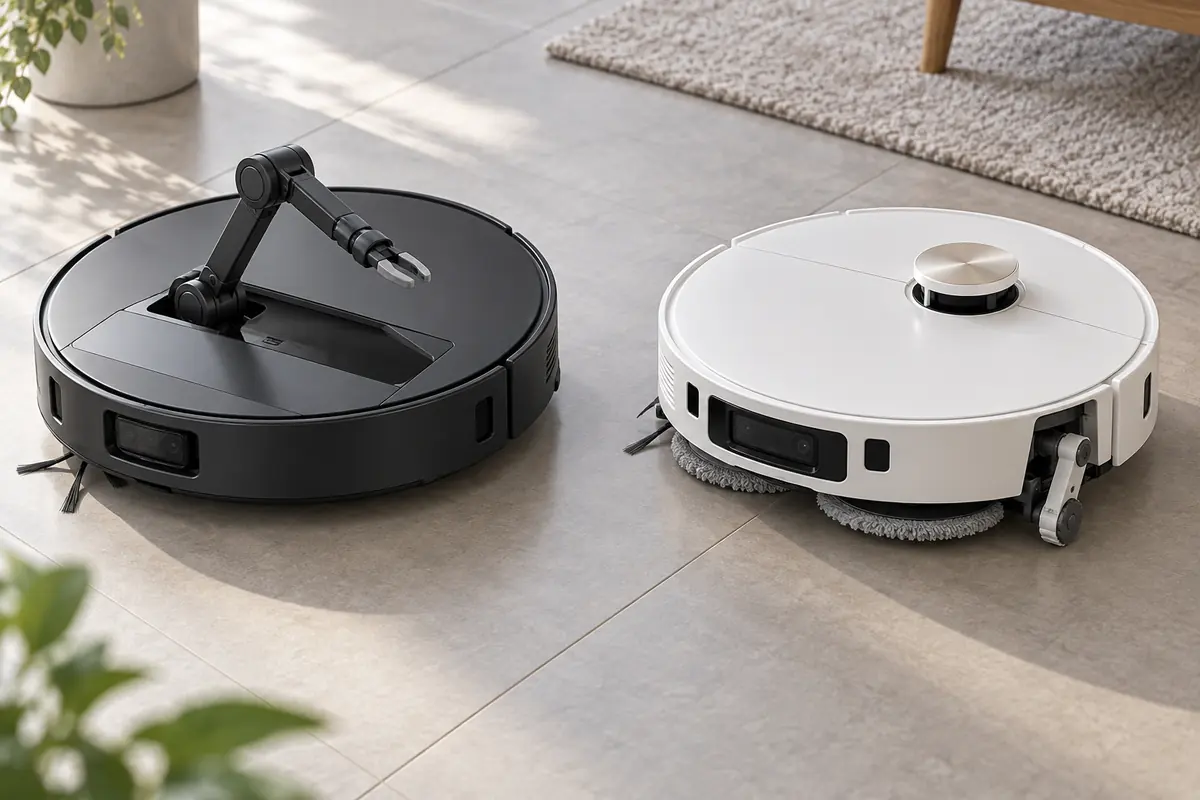
Roborock Saros Z70 vs Dreame X50 Ultra is a comparison between two ambitious robot vacuum-and-mop systems, but their headline innovations solve different problems. Roborock adds a folding OmniGrip mechanical arm intended to move a limited set of small objects. Dreame uses retractable legs and a lowering navigation sensor to reach under furniture and cross unusually difficult transitions. Both also bring strong suction claims, dual brushes, rotating mops, camera-assisted object recognition, and full-service docks.
This guide separates features that are available now from marketing promises and controlled laboratory figures. Neither robot was personally tested for this article. Room geometry, firmware, floor material, debris, and regional bundles can change actual results, so measure your home and confirm the exact package before ordering.
Quick Answer
Choose the Roborock Saros Z70 if its 7.98 cm body, 22,000 Pa published suction, mature Roborock controls, and experimental object-moving arm are useful in your home. Choose the Dreame X50 Ultra if tall thresholds, its 6,400 mAh battery, retractable VersaLift navigation, and HyperStream DuoBrush matter more. For another comparison featuring Roborock Saros Z70, see Roborock Saros Z70 vs eufy S1 Pro. For most buyers, Dreame’s threshold hardware has a clearer everyday purpose; Roborock is the more unusual choice for early adopters who will actually configure and supervise the arm.
Comparison Table
| Feature | Roborock Saros Z70 | Dreame X50 Ultra |
|---|---|---|
| Published maximum suction | 22,000 Pa | 20,000 Pa |
| Signature hardware | Five-axis OmniGrip mechanical arm | ProLeap retractable legs |
| Navigation | StarSight Autonomous System 2.0 | VersaLift DToF, RGB camera, structured light |
| Robot height | 79.8 mm | 89 mm with VersaLift sensor retracted |
| Published object recognition | 108 object types | Up to 200 object types |
| Threshold claim | Up to 4 cm in specified double-layer conditions | Up to 6 cm double-step; 4.2 cm single-step |
| Main brush | Dual all-rubber anti-tangle design | HyperStream detangling DuoBrush |
| Dock wash temperature | Up to 80°C | Up to 80°C |
Key Differences
A mechanical arm versus lifting legs
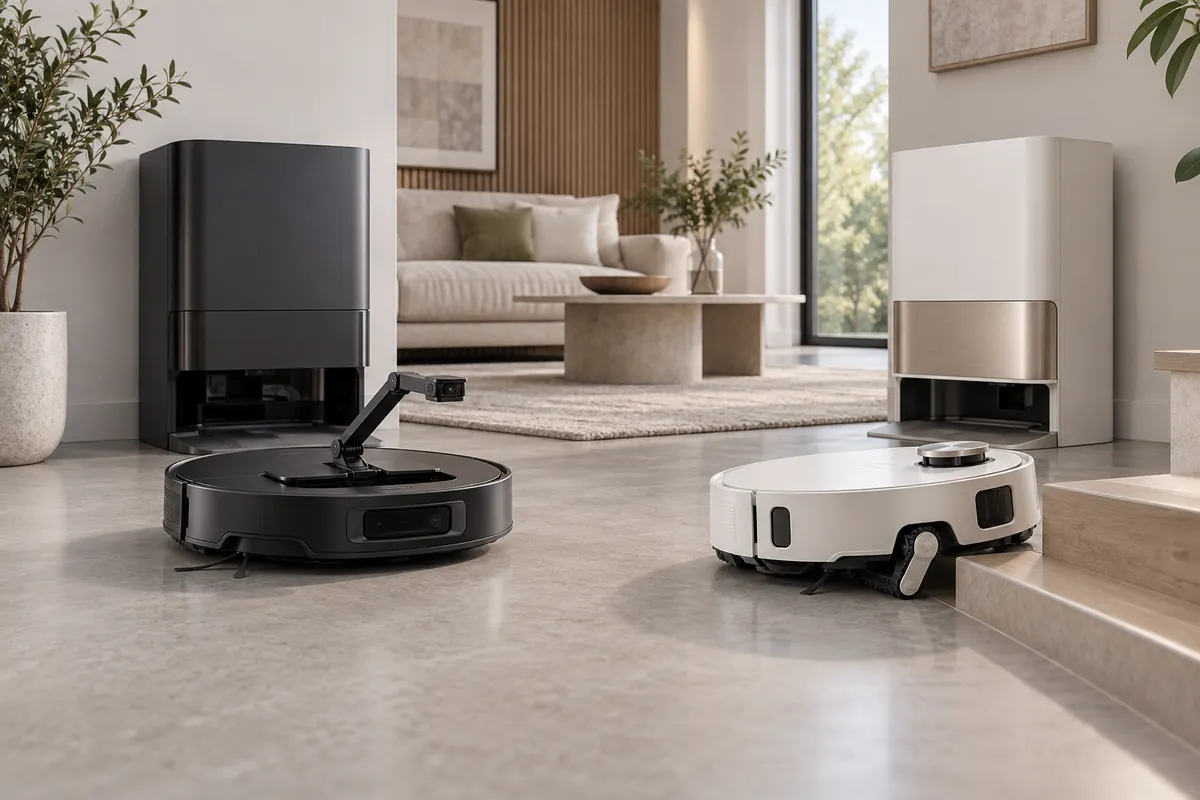
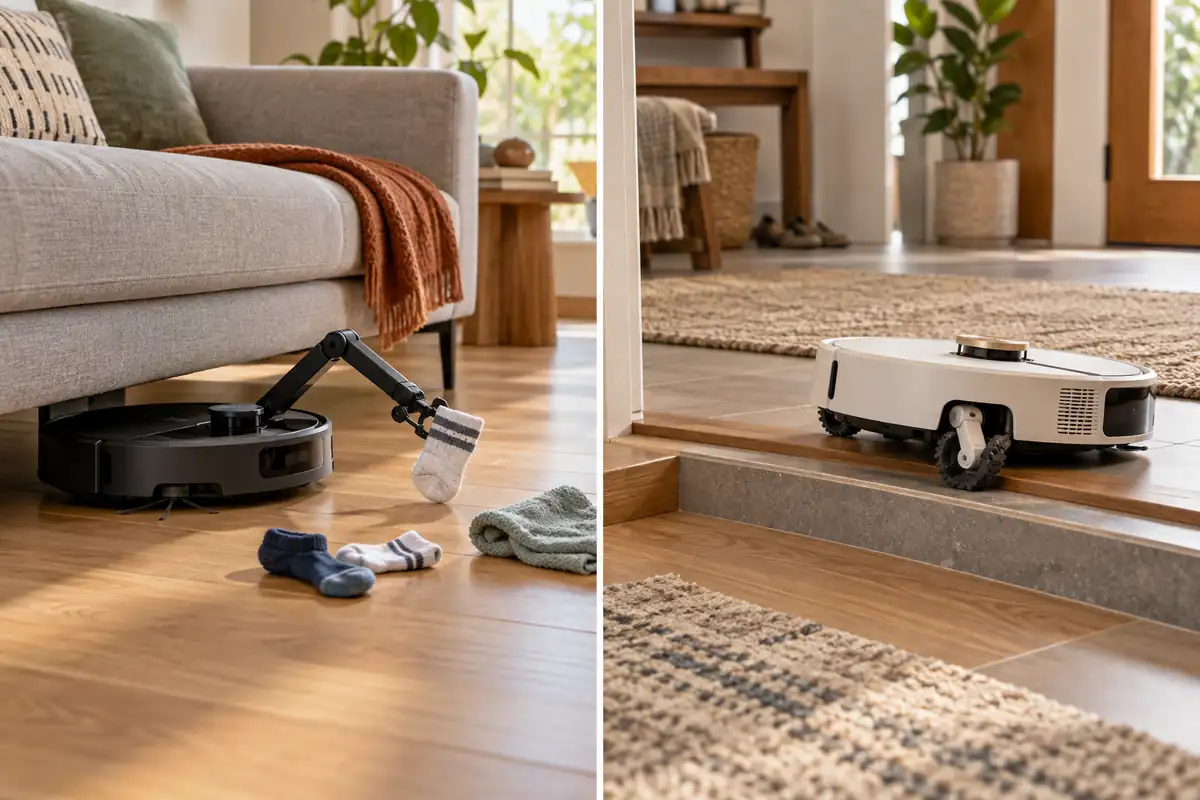
Saros Z70 can recognize and relocate certain lightweight items with its OmniGrip arm. Roborock currently lists examples such as socks, sandals, crumpled tissues, and small towels under 300 grams, and the feature is disabled by default. It is not a general-purpose tidying robot and needs clear drop zones plus sensible supervision. X50 Ultra does not pick up clutter. Its ProLeap legs instead lift the chassis to negotiate transitions. That narrower job is less theatrical, but it may be more valuable in homes divided by tracks or stepped thresholds.
Furniture clearance and navigation
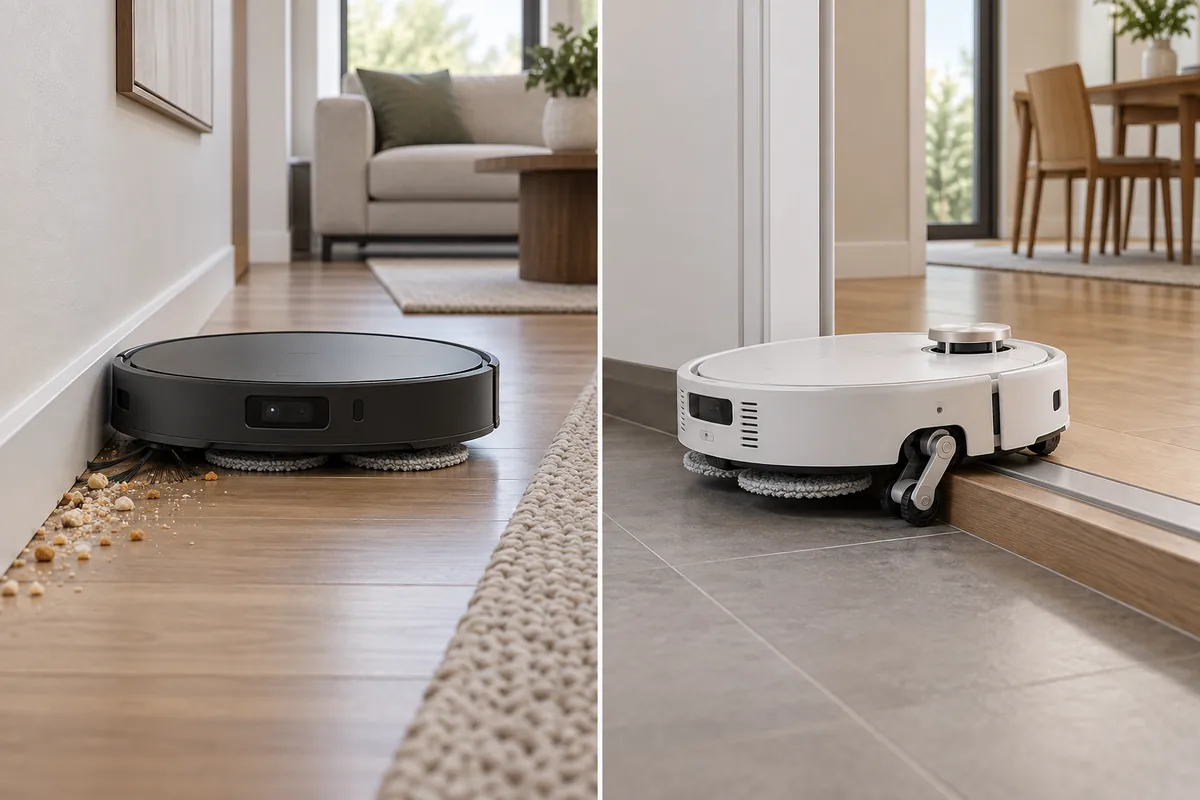
Roborock packages StarSight sensing into a 79.8 mm body without a raised lidar turret. Dreame lowers its VersaLift sensor to reach an official 89 mm body height in low-clearance mode, then raises the sensor where a broader view helps navigation. The 9.2 mm difference can decide whether a robot enters beneath one particular sofa, yet protruding screws or uneven fabric can still cause contact. Measure several points under furniture and leave a margin instead of treating either published height as a guaranteed fit.
Threshold specifications need context
Dreame publishes up to 4.2 cm for a single step and 6 cm for a two-step obstacle. Roborock lists up to 4 cm in specified double-layer conditions for Saros Z70. Those maximums come from shaped test obstacles, not every door track, beveled sill, or loose rug edge. Approach space and the distance between levels matter. X50 Ultra has the stronger paper case for complex transitions, but buyers should photograph and measure the actual obstacle and keep a backup ramp in mind.
Suction figures are not a cleaning score
Saros Z70 carries a 22,000 Pa HyperForce claim, while X50 Ultra is rated at 20,000 Pa. The difference is modest relative to the many variables that determine pickup: airflow, brush contact, route overlap, carpet behavior, debris size, and filter condition. Both use dual-brush anti-tangle approaches and extend edge hardware. Long hair can still wrap around axles and wheels, so owners of shedding pets should compare access to the brush chamber and the local cost of replacement parts.
Major Features Compared
Mopping and carpet handling
Both robots use dual rotating mop pads and can extend a mop toward edges. Roborock can lift its mops and offers automatic mop removal at the dock when configured for vacuum-only work. Dreame also supports mop lifting and removal, plus an extendable pad. These systems reduce wet contact with carpet but cannot make every deep-pile or fringed rug safe. During initial runs, verify carpet recognition, select the desired vacuum-first or avoidance behavior, and draw no-mop zones around delicate textiles.
Dock maintenance
Each dock empties dust, washes pads with water advertised at up to 80°C, dries the mops, dispenses cleaning solution, and can trigger additional washing when dirt sensors call for it. Saros Z70’s Dock 4.0 adds a detachable base and warm-water tank refill. Dreame’s AceClean DryBoard is designed to reduce washboard cleanup. These features shift labor rather than eliminate it: users still replace bags, rinse tanks, clean seals, remove sediment, and use only approved solution.
Apps, voice, and camera privacy
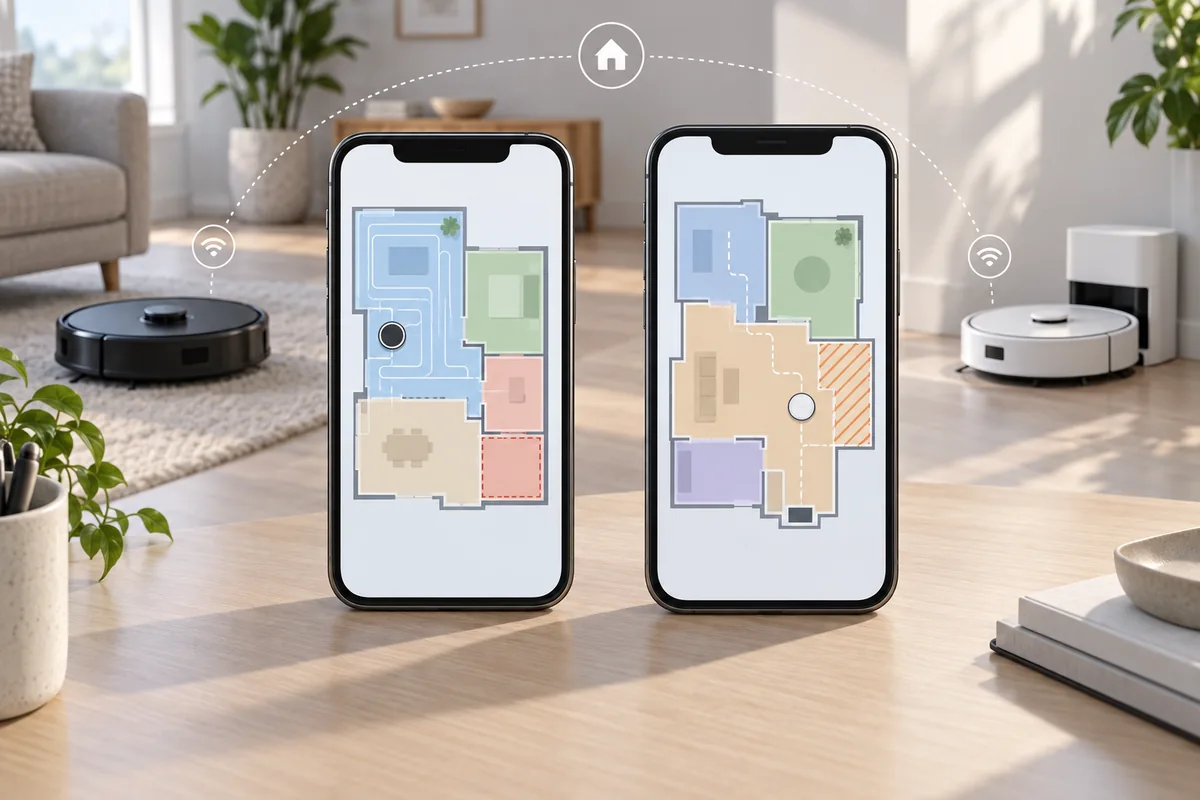
Roborock and Dreame provide room maps, schedules, zones, cleaning sequences, and remote controls. Both also use cameras for object recognition, making account security and camera settings part of the purchase. Roborock says camera functions are off by default on Saros Z70; owners should still inspect every remote-view and pet feature. For a different Roborock matchup, take a look at Roborock Saros 20 vs Dreame X60. Built-in voice control can start basic tasks without reaching for a phone, while third-party assistant support varies by account region and current firmware.
Battery and large-home operation
Dreame specifies a 6,400 mAh battery. Roborock emphasizes 2.5-hour fast charging rather than making battery capacity the center of its US product page. Capacity alone does not predict completed area because suction, mop washing, obstacle detours, carpet boost, and return-to-dock behavior change runtime. For a large home, look at whether the app resumes incomplete rooms reliably and whether the dock is placed where the robot can recharge without repeatedly crossing a tall obstacle.
How to Choose for Your Home
Before buying, measure the lowest furniture opening, the height and shape of every threshold, and the space needed to open the dock. Note delicate wood, dark rugs, deep pile, fringe, pet bowls, and cables that may need map exclusions. Also compare the cost and availability of bags, filters, detergent, brushes, and mop parts. A premium robot still needs sensors wiped, hair removed, dirty water emptied, and its first routes supervised. A dock that is easy to service and an app your household understands often matter more over several years than a narrow lead in one laboratory specification.
Who Roborock Saros Z70 Is Best For
Saros Z70 is the better fit when its low profile and Roborock software matter even without the arm. The arm should be viewed as a constrained bonus, not the sole justification for a premium purchase.
- Homes with low furniture that can accommodate a 79.8 mm robot.
- Existing Roborock households that value familiar maps and routines.
- Early adopters willing to define objects, drop zones, and safety limits.
- Mixed floors where automatic mop removal is appealing.
Who Dreame X50 Ultra Is Best For
X50 Ultra is easier to recommend when thresholds and long cleaning routes are the central problems. Our Roomba Max 705 Combo vs Roborock Saros 10R comparison offers another perspective on Roborock products. Its distinctive hardware serves navigation rather than object handling.
- Floor plans with measured tracks or two-stage transitions.
- Buyers who want a published 6,400 mAh battery specification.
- Pet homes interested in the detangling DuoBrush design.
- Users who prefer Dreamehome controls and AceClean dock hardware.
Frequently Asked Questions
Can Saros Z70 pick up any object?
No. Roborock limits the arm to recognized, lightweight objects and currently cites a 300-gram safety threshold. Shape, placement, lighting, firmware, and training affect recognition. Keep fragile, sharp, liquid-filled, valuable, and pet-related items outside its working area, and supervise early arm sessions.
Will X50 Ultra cross a 6 cm threshold in my home?
Not necessarily. The 6 cm figure refers to Dreame’s specified double-step test, while the single-step figure is lower. Measure height, depth, edge shape, and approach room. An irregular metal track or vertical sill can behave differently from the manufacturer’s test obstacle.
Which robot is better for long pet hair?
Both brands advertise anti-tangle dual-brush systems. That does not mean zero maintenance in every home. Hair can collect around bearings, side-brush hubs, wheels, and dock channels. Compare consumable prices and inspect those areas regularly during the return period.
Do the hot-water docks sanitize the floor?
No sanitation guarantee should be inferred. The up-to-80°C figures describe water in particular dock washing processes under manufacturer conditions. Temperature at the pad and on the floor can differ. Clean tanks and pads as directed and use an appropriate manual method where hygiene standards are critical.
Do both robots work without cloud accounts?
Core button behavior may remain available, but mapping, schedules, remote controls, camera options, updates, and many smart features depend on the vendor app and account. Review current privacy terms and outage behavior before making either system part of a security or pet-monitoring routine.
Which one is quieter?
A single headline noise figure would not settle the question because suction mode, brush contact, floor material, mop washing, drying, and auto-emptying create different sounds. If noise matters, schedule dust emptying and mop care outside sleep or meeting hours and use quieter cleaning modes.
Final Comparison Summary
Roborock Saros Z70 is the more experimental machine: it is slimmer, publishes slightly higher suction, and adds an arm that can relocate a narrow group of small objects. Dreame X50 Ultra directs its special hardware toward mobility, pairing ProLeap legs with VersaLift navigation and a strong double-step threshold claim. Choose Saros Z70 for low furniture, Roborock software, and carefully supervised early-adopter features. Choose X50 Ultra for measured transitions, a clearly specified large battery, and Dreame’s dock-and-brush approach. In either case, floor-plan measurements and ongoing maintenance matter more than the biggest marketing number.