Introduction
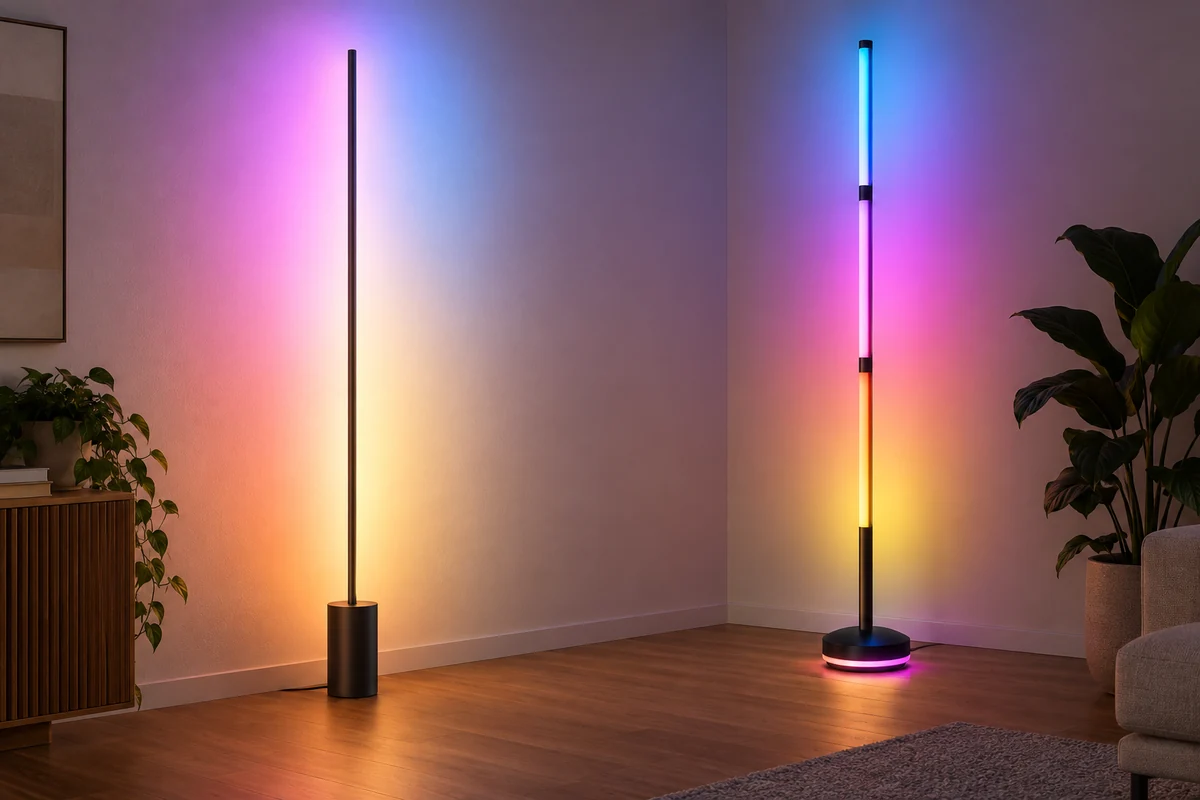
Philips Hue Signe Gradient Floor Lamp vs Govee Floor Lamp 2 compares two current products aimed at the same broad buyer, but their hardware, storage or ecosystem assumptions are not interchangeable. Hue offers a slim aluminum gradient fixture with 2,550 lumens at 4000K, Bluetooth, Zigbee, and deep Hue Bridge integration. Govee uses a lit bar and base, 1,725 lumens, RGBICWW segments, Matter, Wi-Fi, Bluetooth, 82 scenes, and 11 music modes.
This guide uses current manufacturer specifications and support material rather than claiming personal testing. Published detection ranges, battery estimates, brightness, audio performance, and other laboratory results depend on settings and surroundings. Confirm the exact US model, included accessories, current firmware, and subscription terms before buying, because similarly named regional packages can differ.
Quick Answer
Choose Philips Hue Signe Gradient Floor Lamp if higher published brightness, refined white light, Hue Bridge reliability, Hue scenes, switches, entertainment syncing, and an understated fixture are priorities. Choose Govee Floor Lamp 2 if Matter support without a proprietary bridge, a lower-cost effects focus, separate bar-and-base lighting, music modes, and extensive DIY scenes matter more. Hue is the stronger whole-home lighting component; Govee is the more playful standalone ambient lamp.
Comparison Table
| Feature | Philips Hue Signe Gradient Floor Lamp | Govee Floor Lamp 2 |
|---|---|---|
| Published brightness | 2,550 lm at 4000K; 1,800 lm at 2700K | 1,725 lm |
| White range | 2000–6500K | 2200–6500K |
| Color system | RGBW gradient | RGBICWW multicolor zones |
| Connectivity | Bluetooth and Zigbee | 2.4 GHz Wi-Fi and Bluetooth |
| Matter | Through a compatible Hue Bridge setup | Matter supported |
| Effects | Hue scenes and entertainment ecosystem | 82 scenes and 11 music modes |
| Power | 29 W | 48 W |
| Indoor rating | IP20 | Indoor floor-lamp design |
Key Differences
Brightness and useful white light
Hue publishes 2,550 lumens at 4000K and 1,800 at 2700K, compared with Govee’s 1,725-lumen headline. That gives Signe the stronger paper case for indirect room illumination, though both are designed largely to wash a wall rather than replace ideal overhead task lighting. To compare more Philips Hue options, see our Philips Hue Lightstrip vs Govee LED Strip Lights guide. Govee’s 2200–6500K range is close to Hue’s 2000–6500K range. Wall color and lamp orientation will change perceived output.
Network architecture
Signe can start over Bluetooth, but the Hue Bridge’s Zigbee network unlocks the system’s best automations, accessories, remote control, entertainment functions, and Matter exposure. Govee Floor Lamp 2 connects through 2.4 GHz Wi-Fi and Bluetooth and can join supported platforms through Matter. Hue adds a dedicated hub but reduces Wi-Fi device load; Govee avoids that purchase but depends more directly on wireless coverage and its app.
Fixture design and effects
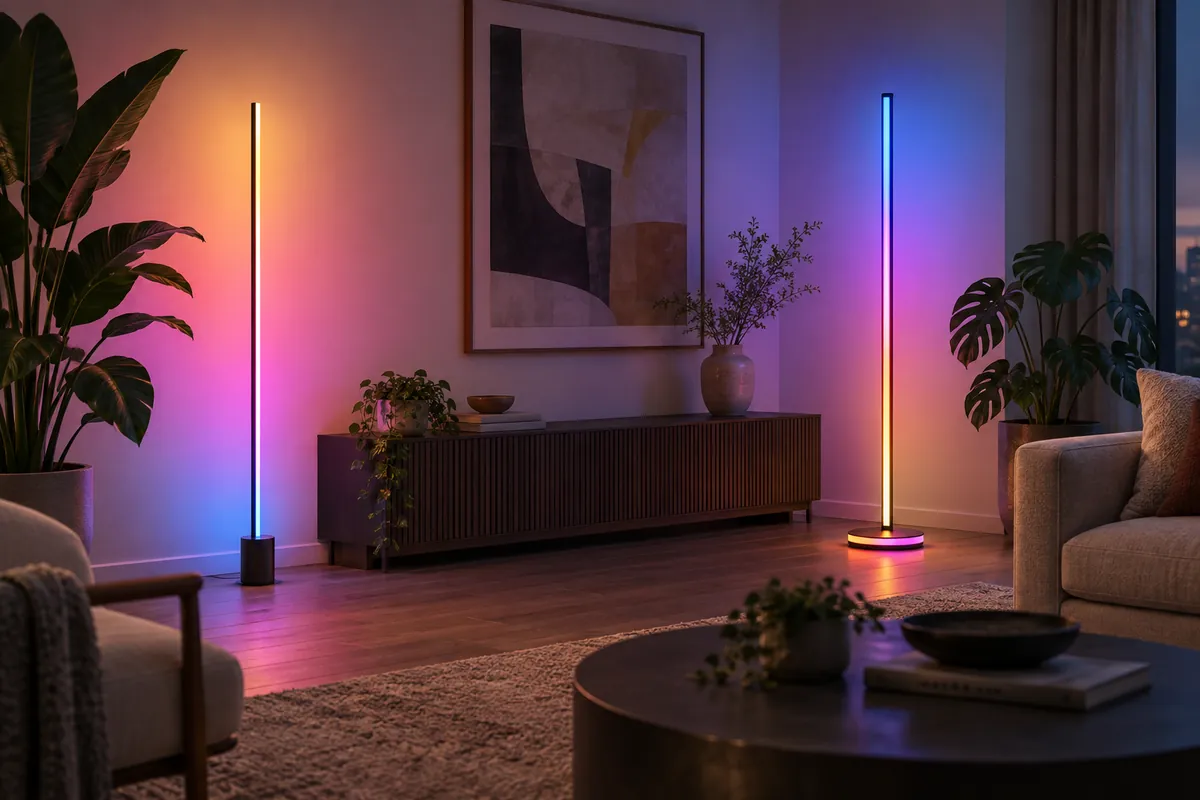
Hue is a narrow, minimalist aluminum column intended to disappear beside a wall while projecting a smooth gradient. Govee adds light to both its roughly 60-inch post and base and emphasizes visible RGBICWW effects, DIY patterns, and music reactions. Hue fits a restrained living room; Govee makes the fixture itself part of a gaming or entertainment scene. Neither aesthetic is objectively better, so consider how it looks when off.
Controls and expansion
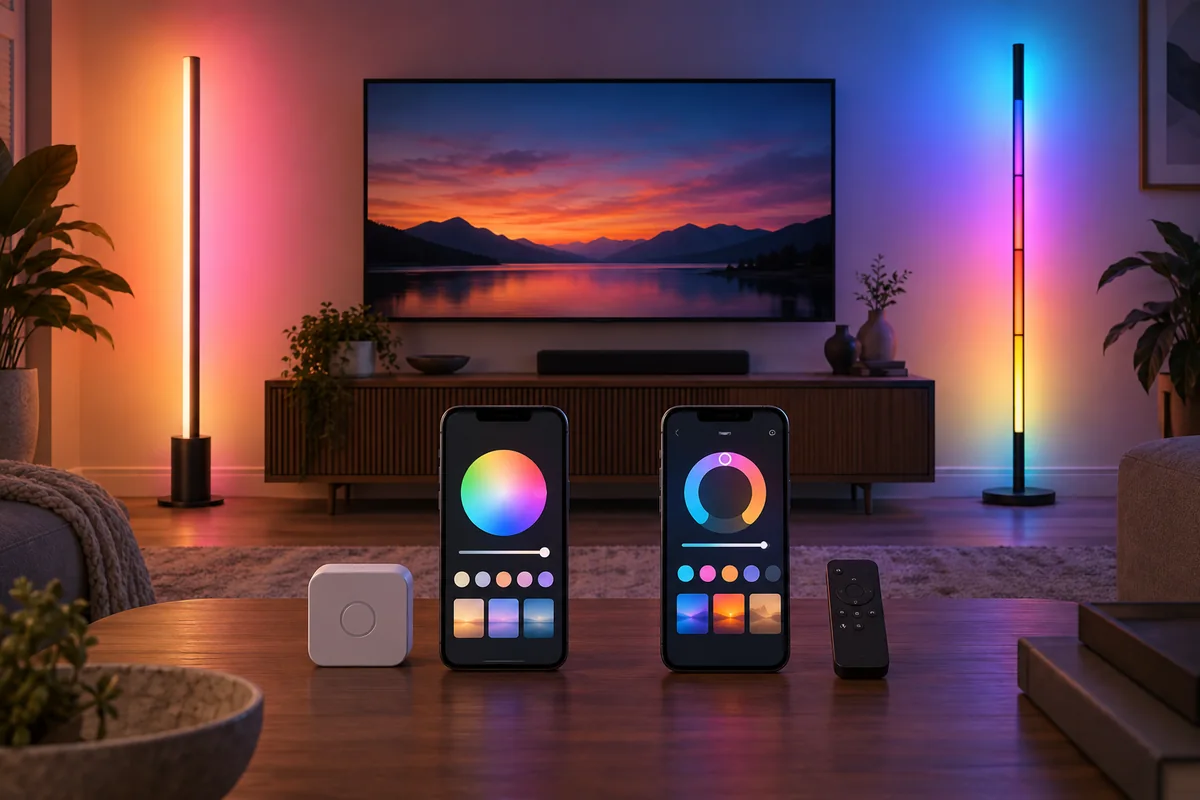
Hue works with its app, voice platforms, Hue switches and sensors, and a large catalog of synchronized lights. Govee uses its app, remote control, voice, DreamView grouping, and Matter platforms, although advanced Govee effects may not appear through Matter. Standard smart-home controls usually cover power, level, and color; brand apps keep richer gradients and scenes. Decide whether daily control will come from a wall accessory, voice, or phone.
Major Features Compared
Everyday performance and its limits
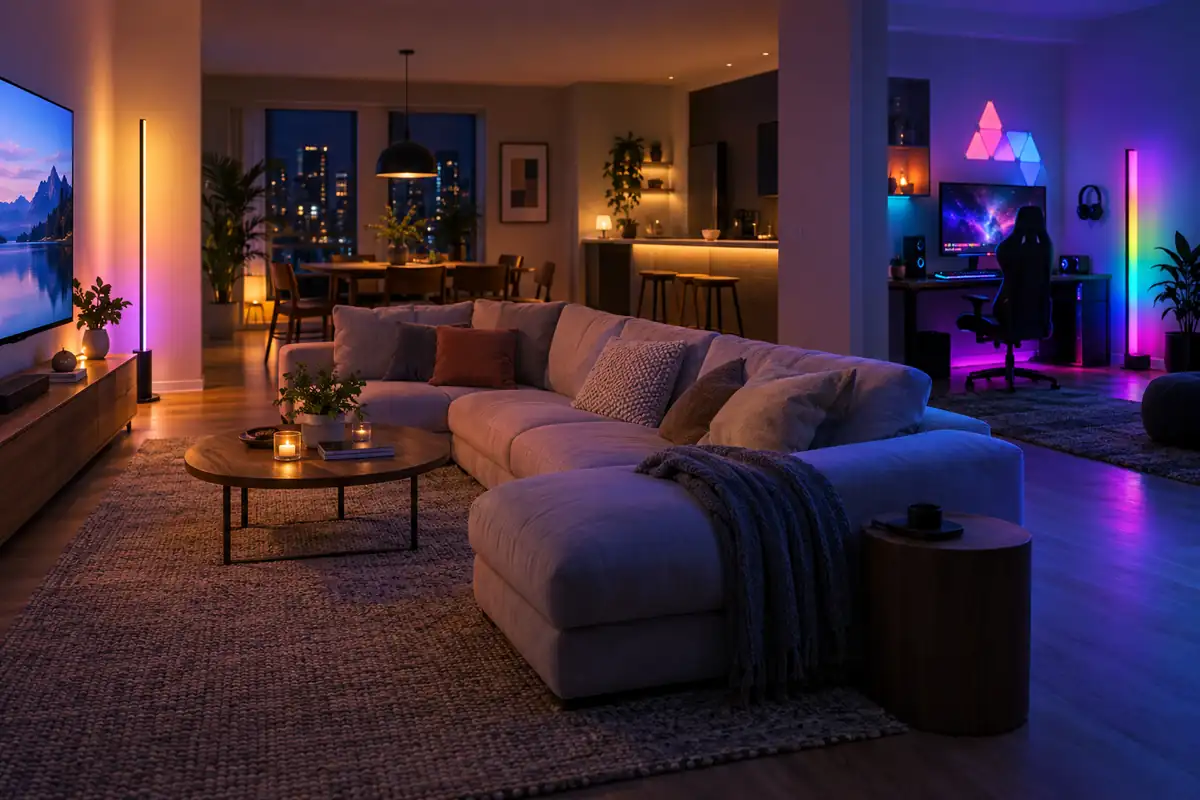
Hue lists a 25,000-hour nominal LED life and uses an integrated, non-replaceable source. Govee also uses integrated lighting. Brightness settings, animated zones, white temperature, wall reflectance, and placement determine both illumination and power use; the nominal 29 W and 48 W ratings are not the same as constant consumption. Avoid using either lamp on a switched outlet that household members routinely turn off. Manufacturer numbers are useful for identifying design intent, but they are not a substitute for placement, setup, and maintenance. Compare the complete workflow rather than awarding the decision to one larger number.
Apps, ecosystems, and privacy
A Hue Bridge can tie Signe to Hue motion sensors, dimmers, entertainment areas, Apple Home, Alexa, Google Home, SmartThings, and Matter. Govee links Floor Lamp 2 with Govee Home, DreamView, Alexa, Google, and Matter. Advanced dynamic scenes normally remain vendor-specific. If local control during an internet outage is important, test the exact bridge, platform, and physical-control path before building routines around it. For a different Philips Hue matchup, take a look at Philips Hue vs Govee Smart Bulbs. Platform support can change by region or firmware. Protect the account with a unique password and multifactor authentication where offered, review household permissions, and enable only the cloud or sensing functions you plan to use.
Installation and long-term ownership
Both are indoor fixtures that need a stable base, a nearby outlet, and cable routing that will not create a trip or pet-chewing hazard. Aim the lamp at a light-colored wall for a broad wash and leave ventilation around electronics. Integrated LEDs mean the whole fixture’s serviceability and warranty matter more than replacement-bulb cost. Save setup codes and avoid incompatible external dimmers. Before the return window closes, test the difficult real-world conditions, document settings that work, and price required accessories or consumables. A product that is easy to service is usually a better long-term choice than one with an impressive feature you rarely use.
How to Choose for Your Home
Start with the physical installation: base or fixture type, voltage, brightness, indoor rating, wall space, and any incompatible dimmer. Then choose the network architecture—direct Wi-Fi, Bluetooth, Zigbee through a bridge, or Matter—and confirm every required controller. Consider how guests will operate the light, what happens when the internet is down, and whether physical switches remain intuitive. Effects are fun, but stable automations, consistent white light, replacement availability, and a clean installation usually matter more in daily use.
Who Philips Hue Signe Gradient Floor Lamp Is Best For
Philips Hue Signe Gradient Floor Lamp is the more natural choice when its defining hardware and platform match the way the product will be used every day. Our Nanoleaf Essentials vs Philips Hue comparison offers another perspective on Philips Hue products.
- Existing Hue Bridge homes using sensors and wall controls.
- Rooms that benefit from the higher published light output.
- Buyers preferring a minimalist aluminum fixture.
- Apple, Alexa, Google, or SmartThings homes standardizing on Hue.
Who Govee Floor Lamp 2 Is Best For
Govee Floor Lamp 2 makes more sense when its different balance of capability, storage, controls, and maintenance solves the more important problem.
- Buyers wanting Matter and Wi-Fi without a Hue Bridge.
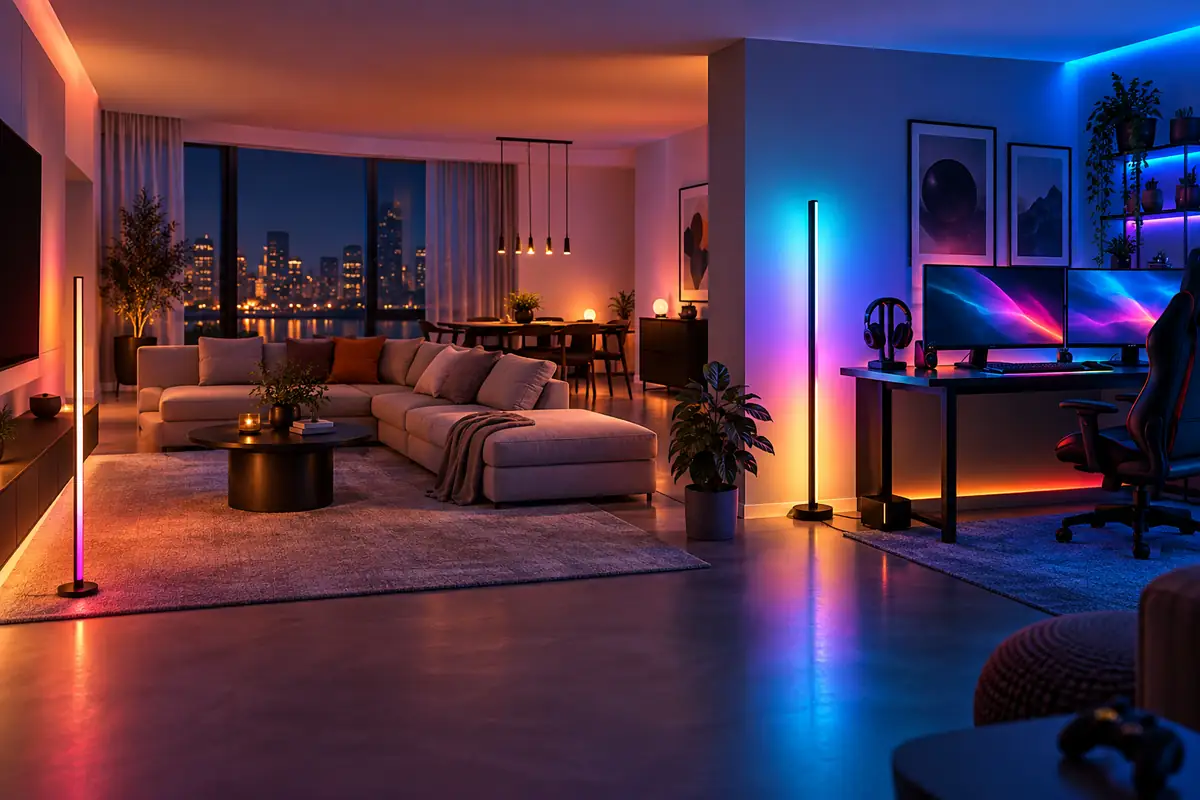
- Gaming rooms that prioritize visible multicolor effects.
- Users who enjoy DIY scenes and music-reactive modes.
- Rooms where lighting in both the post and base suits the design.
Frequently Asked Questions
Does Hue Signe require a Hue Bridge?
No for basic Bluetooth setup, but the Bridge is required for many advanced Hue routines, accessories, remote features, entertainment syncing, and Matter integration. Budget it if Signe will become part of a full Hue system.
Does Govee Floor Lamp 2 support Apple Home?
Govee lists Matter support, which can expose supported controls to Apple Home through a suitable Matter controller. Govee-specific scenes, DreamView, music modes, and DIY effects generally remain in Govee Home.
Can either lamp replace a reading lamp?
They can add substantial ambient light, especially Hue at cooler white settings, but their wall-wash geometry may create glare or poor task direction. Use a dedicated task light where eye-level illumination and placement matter.
Can the LEDs be replaced?
Hue documents an integrated, non-replaceable light source for Signe. Govee is likewise an integrated smart fixture rather than a standard replaceable-bulb lamp. Warranty, expected lifetime, and electronic serviceability should be part of the price comparison.
Which has better music sync?
Govee puts 11 music modes and a microphone-led effects experience at the center of the product. Hue can sync entertainment through supported Hue software and accessories. The better choice depends on source device, latency tolerance, and existing ecosystem.
Are the lumen figures directly comparable?
They are useful manufacturer ratings, but Hue publishes output at named white temperatures while Govee provides a headline maximum. Multicolor effects often look dimmer than peak white. Wall color, distance, and gradient selection also change perceived brightness.
Final Comparison Summary
Philips Hue Signe Gradient Floor Lamp is the stronger lighting-system purchase: it is brighter on paper, offers polished white and gradient output, and integrates deeply with Hue Bridge accessories and whole-home routines. Govee Floor Lamp 2 delivers more visible effects, direct Wi-Fi, Matter, music modes, and an illuminated base at a more entertainment-focused position. Choose Hue for dependable ecosystem expansion and indirect room light. Choose Govee for creative ambiance. Confirm control habits and integrated-LED service expectations before paying for either fixture.