Introduction
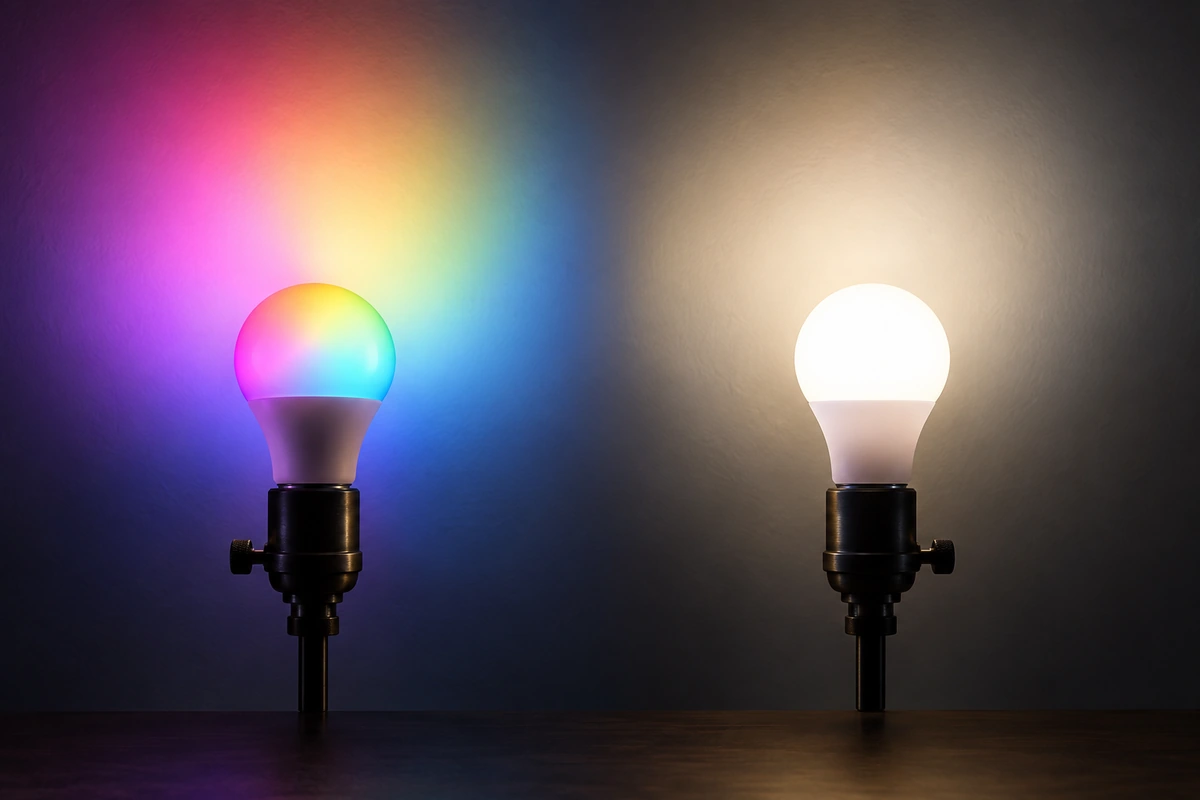
LIFX SuperColor A21 vs Philips Hue A21 1600 compares two current products aimed at the same broad buyer, but their hardware, storage or ecosystem assumptions are not interchangeable. Both are E26, 100-watt-equivalent, 1,600-lumen color bulbs, but LIFX connects directly to 2.4 GHz Wi-Fi and Matter with no hub. Hue uses Bluetooth or Zigbee, adds extremely deep dimming and Chromasync color, and reaches its full ecosystem through a Hue Bridge.
This guide uses current manufacturer specifications and support material rather than claiming personal testing. Published detection ranges, battery estimates, brightness, audio performance, and other laboratory results depend on settings and surroundings. Confirm the exact US model, included accessories, current firmware, and subscription terms before buying, because similarly named regional packages can differ.
Quick Answer
Choose LIFX SuperColor A21 if no-hub Wi-Fi, Matter, a 1500–9000K white range, CRI 90, and a lower-complexity single-bulb setup are priorities. Choose Philips Hue A21 1600 if 0.2 percent dimming, a 1000–20000K full-spectrum range, Hue Bridge automations, switches, sensors, entertainment syncing, and a large multi-light system matter more. LIFX is simpler per bulb; Hue is stronger as the number of rooms and accessories grows.
Comparison Table
| Feature | LIFX SuperColor A21 | Philips Hue A21 1600 |
|---|---|---|
| Brightness | 1,600 lm | 1,600 lm at 4000K |
| Equivalent | 100 W | 100 W |
| Base | E26 A21 | E26 A21 |
| White range | 1500–9000K | 1000–20000K |
| Color rendering | CRI 90 | CRI 82 |
| Dimming | 1–100% software dimming | Down to 0.2% |
| Network | 2.4 GHz Wi-Fi; Matter; no hub | Bluetooth and Zigbee; Hue Bridge for full features |
| Power | 15.5 W | 13.5 W |
Key Differences
Direct Wi-Fi or Zigbee bridge
LIFX joins 2.4 GHz Wi-Fi directly and supports Matter, avoiding a dedicated bridge for a small installation. Hue can start over Bluetooth, but a Hue Bridge moves routine traffic to Zigbee and unlocks remote access, accessories, advanced automation, entertainment features, and Matter exposure. To compare more Philips Hue options, see our Philips Hue Signe Gradient Floor Lamp vs Govee Floor Lamp 2 guide. Direct Wi-Fi is economical for a few bulbs; a bridge can become easier to manage when dozens of lights must respond together.
White-light range and quality
LIFX publishes 1500–9000K and CRI 90. The current Hue A21 1600 lists 1000–20000K full-spectrum light, Chromasync precision color, and CRI 82. Wider Kelvin endpoints do not automatically mean more natural everyday whites; CRI, tint, fixture, and room surfaces matter. Most homes will spend more time between warm evening and neutral daylight settings than at the extreme numbers.
Low-level dimming
Hue advertises dimming down to 0.2 percent, while LIFX lists software dimming from one to 100 percent. That makes Hue the stronger specification for night lights and very gradual bedtime scenes. Perceived minimum brightness also depends on color temperature and fixture shade. Neither smart bulb should be used on an incompatible wall dimmer; keep clean, constant power and dim in software or with approved smart controls.
Apps and physical controls
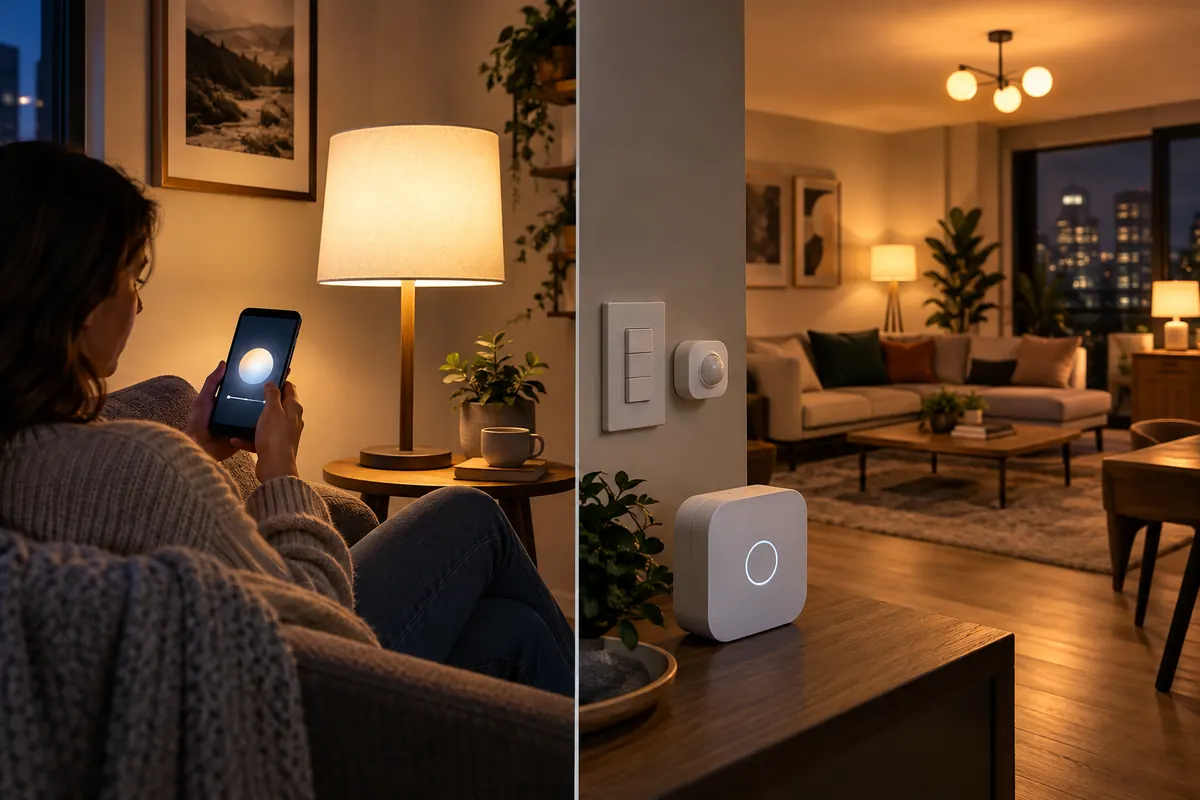
LIFX puts scenes, schedules, themes, circadian routines, and Matter access into a hub-free design. Hue adds a broader range of dedicated switches, motion sensors, Bridge automations, entertainment syncing, and third-party integrations. Matter covers common controls but not every brand-specific effect. A renter with one lamp may prefer LIFX; a whole-home plan with physical controls and many rooms often favors Hue.
Major Features Compared
Everyday performance and its limits
Both bulbs reach 1,600 lumens in their specified white conditions, so fixture ventilation, beam pattern, diffuser, and color mode determine perceived light. LIFX lists a roughly 220-degree beam and 15.5 W power; Hue lists 13.5 W and 25,000-hour nominal life. Maximum saturated colors are normally dimmer than maximum white, and an enclosed fixture may be restricted even when the bulb physically fits. Manufacturer numbers are useful for identifying design intent, but they are not a substitute for placement, setup, and maintenance. Compare the complete workflow rather than awarding the decision to one larger number.
Apps, ecosystems, and privacy
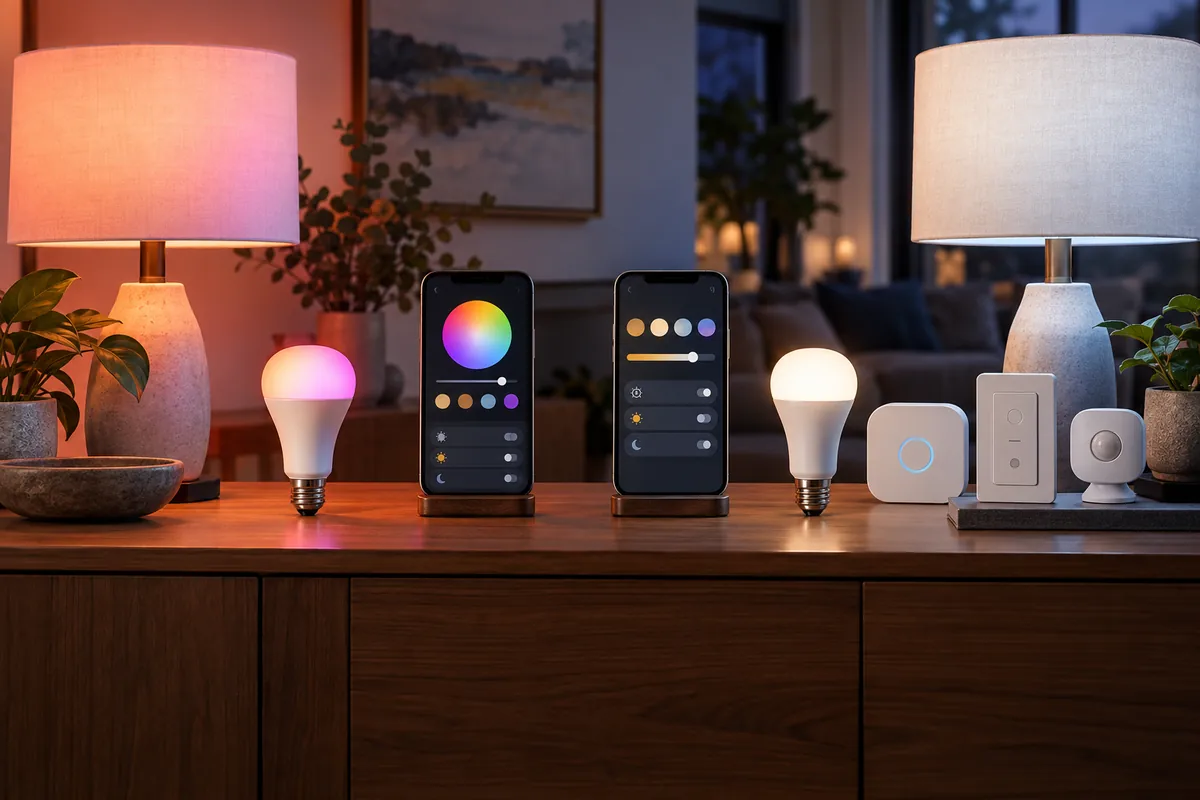
LIFX lists Matter plus Apple Home, Alexa, Google Home, and SmartThings without a proprietary hub, though remote Matter control needs a suitable platform controller. Hue supports the same major ecosystems most completely through its Bridge and has a mature accessory catalog. If internet-independent local routines matter, test the chosen Matter controller or Hue Bridge behavior instead of relying only on a Works With logo. Platform support can change by region or firmware. Protect the account with a unique password and multifactor authentication where offered, review household permissions, and enable only the cloud or sensing functions you plan to use.
Installation and long-term ownership
Both A21 bulbs are taller and wider than common A19 lamps. Measure the shade, harp, socket depth, and airflow, and check the fixture's wattage and enclosed-rating requirements. Keep the wall switch powered, label it for guests, and save setup codes. Do not use either in damp or outdoor locations unless the exact fixture and bulb documentation permit it. For a different Philips Hue matchup, take a look at Nanoleaf Essentials vs Philips Hue. Before the return window closes, test the difficult real-world conditions, document settings that work, and price required accessories or consumables. A product that is easy to service is usually a better long-term choice than one with an impressive feature you rarely use.
How to Choose for Your Home
Start with the physical installation: base or fixture type, voltage, brightness, indoor rating, wall space, and any incompatible dimmer. Then choose the network architecture—direct Wi-Fi, Bluetooth, Zigbee through a bridge, or Matter—and confirm every required controller. Consider how guests will operate the light, what happens when the internet is down, and whether physical switches remain intuitive. Effects are fun, but stable automations, consistent white light, replacement availability, and a clean installation usually matter more in daily use.
Who LIFX SuperColor A21 Is Best For
LIFX SuperColor A21 is the more natural choice when its defining hardware and platform match the way the product will be used every day.
- One-room or small installations avoiding a proprietary bridge.
- Matter homes with reliable 2.4 GHz Wi-Fi.
- Users prioritizing CRI 90 and a broad practical white range.
- Buyers who prefer LIFX themes and direct per-bulb control.
Who Philips Hue A21 1600 Is Best For
Philips Hue A21 1600 makes more sense when its different balance of capability, storage, controls, and maintenance solves the more important problem. Our Philips Hue vs Govee Smart Bulbs comparison offers another perspective on Philips Hue products.
- Existing Hue Bridge homes with switches and sensors.
- Bedrooms requiring exceptionally low software dimming.
- Large installations benefiting from Zigbee rather than many Wi-Fi clients.
- Users building entertainment areas or advanced Hue automations.
Frequently Asked Questions
Do both bulbs reach 1,600 lumens in color mode?
The 1,600-lumen ratings describe specified white-light output, not every saturated color. RGB colors typically produce less measured brightness. Compare the intended white setting and fixture rather than expecting maximum output from deep blue or red.
Does LIFX SuperColor A21 need a hub?
No. It connects to 2.4 GHz Wi-Fi and can use LIFX controls or Matter platforms. Remote Matter access and automations still require the appropriate smart-home controller for the chosen ecosystem.
Does Philips Hue A21 need a Bridge?
Not for basic Bluetooth control, but the Bridge unlocks the ecosystem's main advantages: Zigbee networking, remote access, accessories, advanced routines, entertainment syncing, and Matter integration. Include it in a serious system budget.
Can I use these bulbs with a wall dimmer?
Standard phase-cut dimmers are generally inappropriate for smart bulbs and can cause flicker, noise, dropouts, or damage. Supply full constant power and use app, voice, Matter, or manufacturer-approved smart controls for dimming.
Will an A21 bulb fit an A19 fixture?
Both use an E26 base, but the A21 envelope is physically larger. Measure shade clearance, socket depth, and ventilation. Physical fit does not override fixture wattage, enclosed-use, temperature, or indoor-location restrictions.
Which is better during an internet outage?
Local behavior depends on the controlling device and configured platform. A Hue Bridge can keep many Zigbee controls local; LIFX Matter control may remain local through a suitable controller. Test switches and automations after intentionally disconnecting internet service.
Final Comparison Summary
LIFX SuperColor A21 is the stronger high-output smart bulb for a small, hub-free installation, pairing 1,600 lumens with CRI 90, direct Wi-Fi, Matter, and a useful 1500–9000K range. Philips Hue A21 1600 is the better system bulb, adding ultra-low dimming, a wider published spectrum, Zigbee through Hue Bridge, and a deep catalog of switches, sensors, and entertainment tools. Choose network architecture before color specifications, then verify that the larger A21 body and fixture conditions are safe.