Introduction
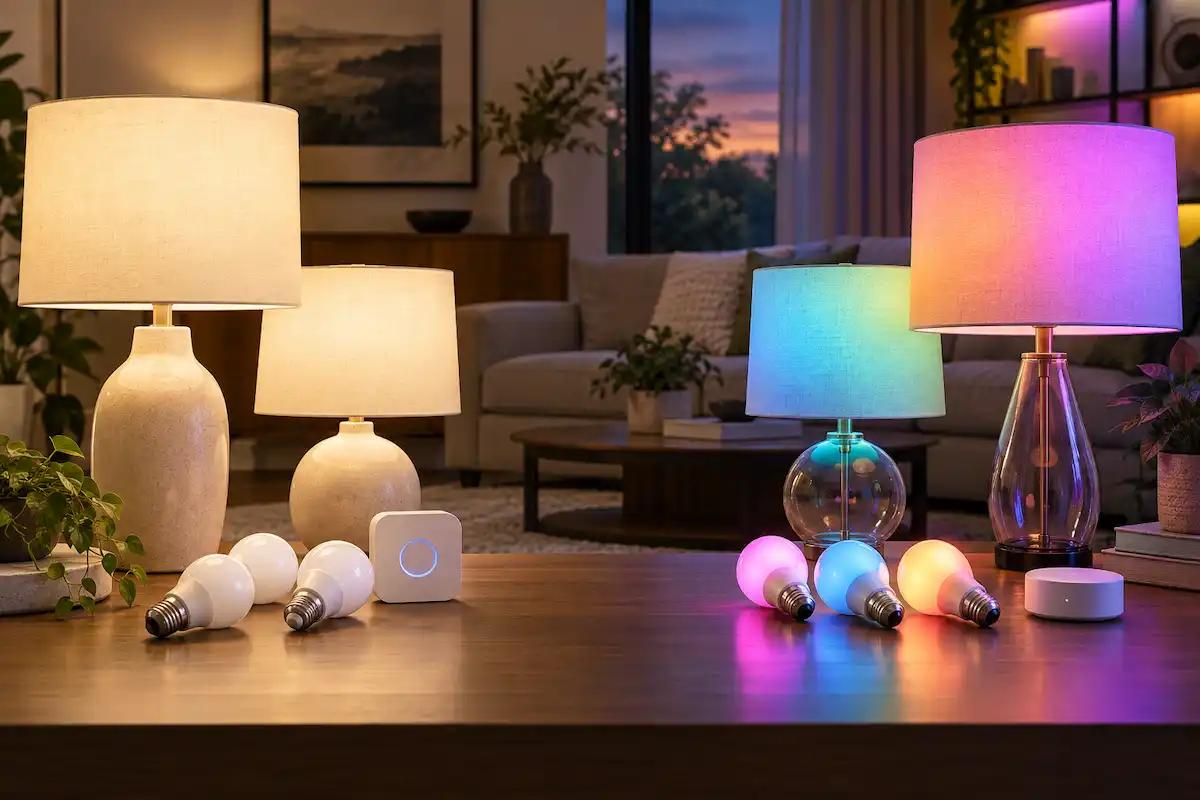
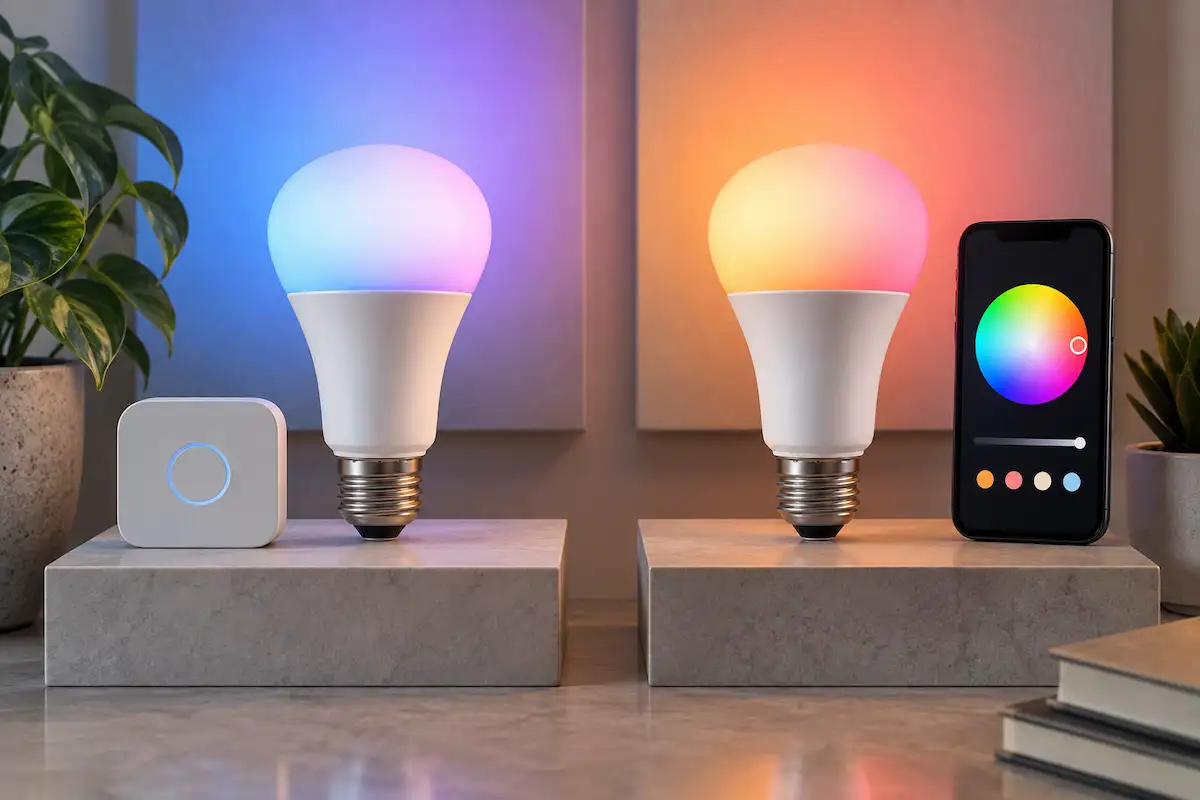
Philips Hue vs Govee Smart Bulbs compares two systems that both sell app-controlled bulbs with tunable white and color options, but their systems are organized differently. Hue’s full experience is centered on the Hue Bridge and a Zigbee lighting network, although many bulbs also offer Bluetooth for a smaller setup. Govee commonly uses Wi-Fi and Bluetooth, with current products such as the H6006 A19 adding Matter compatibility without a proprietary lighting bridge.
Because both brands sell many shapes, brightness levels, and generations, this article compares the systems and uses current representative A19 products where a concrete example is needed. It does not imply that every Hue or Govee bulb shares one lumen output, color range, protocol, or Matter implementation. Confirm the model number, base, voltage, and feature list for the package you plan to buy.
Quick Answer
In the Philips Hue vs Govee Smart Bulbs comparison, choose Philips Hue if you want a mature bridge-based system, Zigbee mesh behavior, extensive accessories, polished automations, and broad Apple Home, Google Home, Alexa, SmartThings, and Matter integration through the Bridge. For another comparison featuring Philips Hue, see Nanoleaf Essentials vs Philips Hue. Choose Govee if you want lower entry cost, direct Wi-Fi/Bluetooth setup, expressive app effects, and Matter on supported current bulbs such as the H6006. Hue is the stronger whole-home platform; Govee is the stronger value-and-effects option.
Comparison Table
| Feature | Philips Hue smart bulbs | Govee smart bulbs |
|---|---|---|
| Core network | Zigbee through Hue Bridge; Bluetooth on supported bulbs | Wi-Fi and Bluetooth; Matter on supported models |
| Matter path | Via Hue Bridge | Directly on specified Matter-compatible bulbs |
| Bridge required | Not for basic Bluetooth; required for full system | No proprietary bridge for common Wi-Fi models |
| Representative brightness | Varies; current A19 models include 1100-lumen options | H6006 A19: 1000 lumens |
| Color | White, White Ambiance, and White and Color lines | White/color models with app effects |
| Scale | Bridge supports up to 50 bulbs and 12 accessories | Depends on Wi-Fi, app, and model limits |
| Physical controls | Broad Hue switch and sensor ecosystem | Compatible Govee controls vary by product |
| Best fit | Integrated whole-home lighting | Affordable rooms and effect-focused setups |
Philips Hue vs Govee Smart Bulbs: Key Differences
Bridge-based Zigbee versus direct Wi-Fi
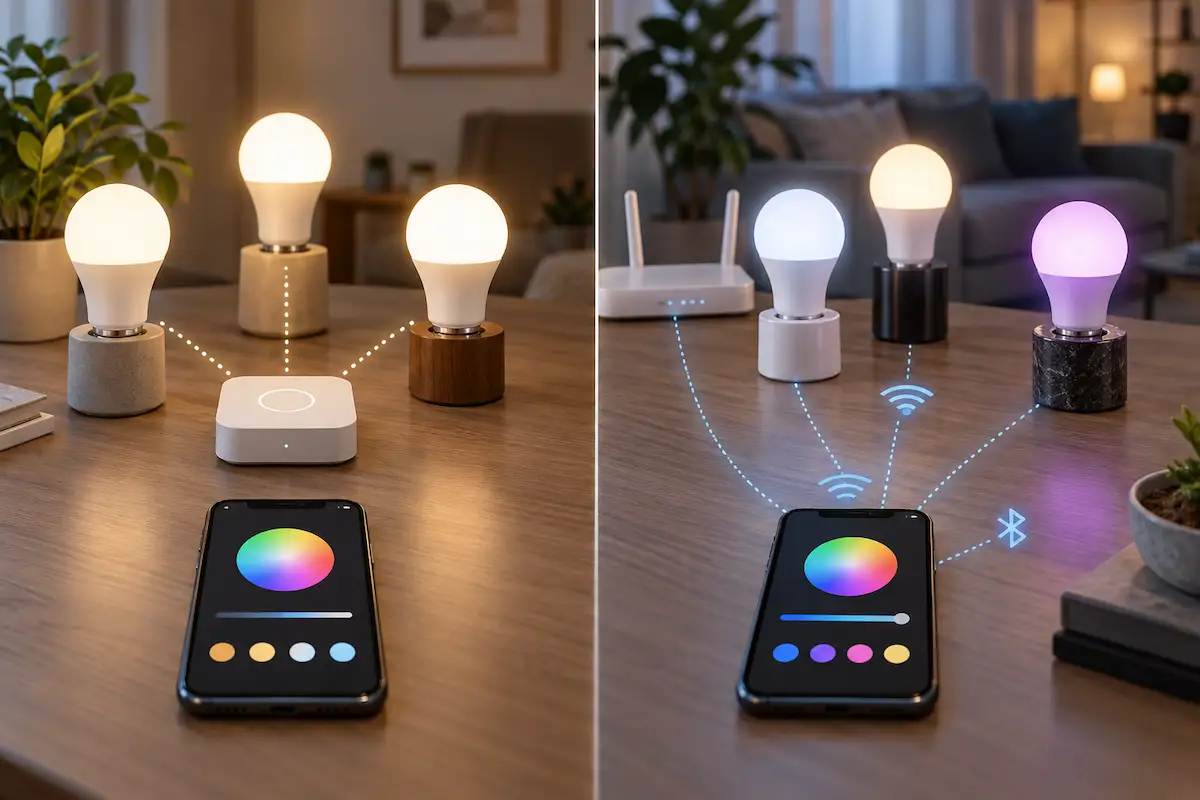
Hue Bridge connects to the network by Ethernet and forms a Zigbee lighting network that can keep bulb traffic away from the main Wi-Fi. This architecture is useful when many lights and accessories must work together. Govee bulbs such as H6006 connect through Wi-Fi and Bluetooth, reducing the upfront hardware count but adding clients to the wireless network. A strong router can handle many devices, but isolation, coverage, and client limits deserve attention in a large installation.
Matter implementation
Hue exposes supported lights to Matter through the Hue Bridge; the bulbs themselves remain part of the Hue Zigbee system. Govee includes Matter directly in selected bulb models, and older or cheaper models should not be assumed compatible. Matter generally provides common power, brightness, color, and automation controls, while proprietary scenes and effects remain in the manufacturer app. Keep setup codes secure and retain the vendor app for firmware updates.
Effects and everyday lighting
Govee emphasizes themed scenes, music-reactive functions, grouping, and colorful effects. Hue also offers scenes, entertainment features, and effects, but its system is especially strong for repeatable everyday routines and physical accessories. Buyers should distinguish novelty effects from useful white-light quality. For kitchens, desks, and reading areas, brightness, color temperature, dimming smoothness, and switch behavior may matter more than animated colors. Everyday lighting quality is a key factor in Philips Hue vs Govee Smart Bulbs.

Expansion and ownership cost
Hue requires more initial investment when the Bridge and dedicated controls are included, but one bridge can manage up to 50 bulbs and 12 accessories under current specifications. Govee lowers the starting barrier and often sells multipacks, but a whole-home Wi-Fi deployment depends on router capacity and model consistency. Compare replacement availability, warranty, firmware support, and whether future bulbs will match existing colors—not only the first package price.
Major Features Compared
Brightness and color specifications
Hue sells multiple A19 outputs, including current 1100-lumen products, and separate white-only, tunable-white, and color lines. Govee H6006 is a 1000-lumen, CRI 90-plus, 16-million-color example. Those numbers apply to the named product, not every bulb in the ecosystem. Lumen ratings can also vary with color temperature, while saturated colors are normally dimmer than white. Match the exact bulb to the room’s required task lighting.
Automations and physical control
Hue Bridge supports schedules, away control, sensors, switches, and ecosystem automations without relying only on a phone. Govee provides timers, grouping, scenes, and supported ecosystem routines, with physical-control options varying by product. For a different Philips Hue matchup, take a look at Philips Hue Lightstrip vs Govee LED Strip Lights. A smart-lighting system should remain understandable to guests. Dedicated switches or clear wall-control behavior prevent someone from cutting power and making app commands unavailable.
Voice and ecosystem compatibility
Hue Bridge supports major platforms including Apple Home, Alexa, Google Home, SmartThings, and Matter. Govee’s current Matter bulbs can join compatible Matter ecosystems, while non-Matter models rely on listed cloud integrations. Check whether a platform exposes only basic bulb control or also scenes and effects. The vendor app usually retains the deepest feature set, so cross-platform households may still need two layers of control.
Reliability and privacy
A local Zigbee lighting network can keep routine bulb communication independent of Wi-Fi congestion, though apps and remote functions still involve network services. Direct Wi-Fi is simpler but makes router uptime and credentials central. For both systems, install firmware updates, use unique account passwords, protect email access, and place IoT devices on an appropriate network segment if your router supports it. No protocol alone guarantees security or reliability.
How to Choose for Your Home
When weighing Philips Hue vs Govee Smart Bulbs, begin with the fixture and room: confirm base type, voltage, enclosed-fixture restrictions, required brightness, color needs, and whether a wall dimmer is present. Smart bulbs generally need constant power and should not be placed on an incompatible traditional dimmer. Then choose the network architecture—direct Wi-Fi, Bluetooth, Zigbee through a bridge, or Matter over Thread—and confirm the necessary controller or border router. Consider how many lights the system must support, how guests will control them, and whether physical switches remain intuitive. Scenes and effects are useful, but stable automations, replacement availability, and consistent white light often matter more for everyday ownership.
Who Philips Hue smart bulbs Is Best For
Philips Hue is best when lighting is permanent home infrastructure rather than a few decorative bulbs. The Bridge, accessories, and cross-platform integrations create a coherent system that can grow room by room.
- Whole-home installations with many bulbs and switches.
- Apple Home users and mixed-ecosystem households.
- Users who want dedicated motion sensors and wall controls.
- Buyers prioritizing a mature Zigbee lighting platform.
Who Govee smart bulbs Is Best For
Govee is best for buyers who want to start quickly without a proprietary bridge and who value colorful effects. Our Philips Hue Signe Gradient Floor Lamp vs Govee Floor Lamp 2 comparison offers another perspective on Philips Hue products. Supported Matter models also provide a modern route into major ecosystems at a lower entry barrier.
- Small apartments or single-room installations.
- Effect-focused bedrooms, gaming rooms, and entertainment spaces.
- Buyers selecting current Matter-compatible Govee models.
- Homes with strong Wi-Fi and modest device counts.
Frequently Asked Questions
These Philips Hue vs Govee Smart Bulbs questions cover bridges, Matter, larger installations, mixed systems, wall dimmers, and color quality.
Does Philips Hue require a Bridge?
Basic Bluetooth control works on supported bulbs, but the Bridge unlocks the full Zigbee system, remote access, accessories, broader automations, and Matter integration.
Do all Govee bulbs support Matter?
No. Matter support is model-specific. The current H6006 A19 is marketed as Matter compatible, but verify the model number printed on the listing and package.
Which system is better for 30 or more bulbs?
Hue’s dedicated Zigbee bridge architecture is easier to plan at larger scale. Govee can still work, but router client capacity, wireless coverage, and model limits become more important.
Can Hue and Govee work in the same home?
Yes, a shared ecosystem such as Apple Home, Google Home, Alexa, SmartThings, or Matter may expose supported controls. Manufacturer-specific scenes still require their own apps.
Can smart bulbs work with wall dimmers?
Generally they need constant power and should not be placed on incompatible traditional dimmers. Use manufacturer-supported smart controls and follow the bulb’s fixture requirements.
Which has better colors?
Color preference is subjective and varies by exact bulb, brightness, and scene. Compare the named models and prioritize white-light performance for everyday rooms rather than assuming an ecosystem-wide winner.
Final Comparison Summary
Philips Hue vs Govee Smart Bulbs comes down to mature whole-home control versus affordable effects. Philips Hue is the stronger long-term lighting system for buyers who value a dedicated bridge, Zigbee scale, physical accessories, polished routines, and broad integrations. Govee is the stronger value choice for direct setup, energetic effects, and supported direct-Matter bulbs. Hue’s higher system cost can make sense across many rooms; Govee’s simplicity can make more sense for a few fixtures. Verify the exact model because protocols, brightness, and color capability vary within both brands.