Introduction
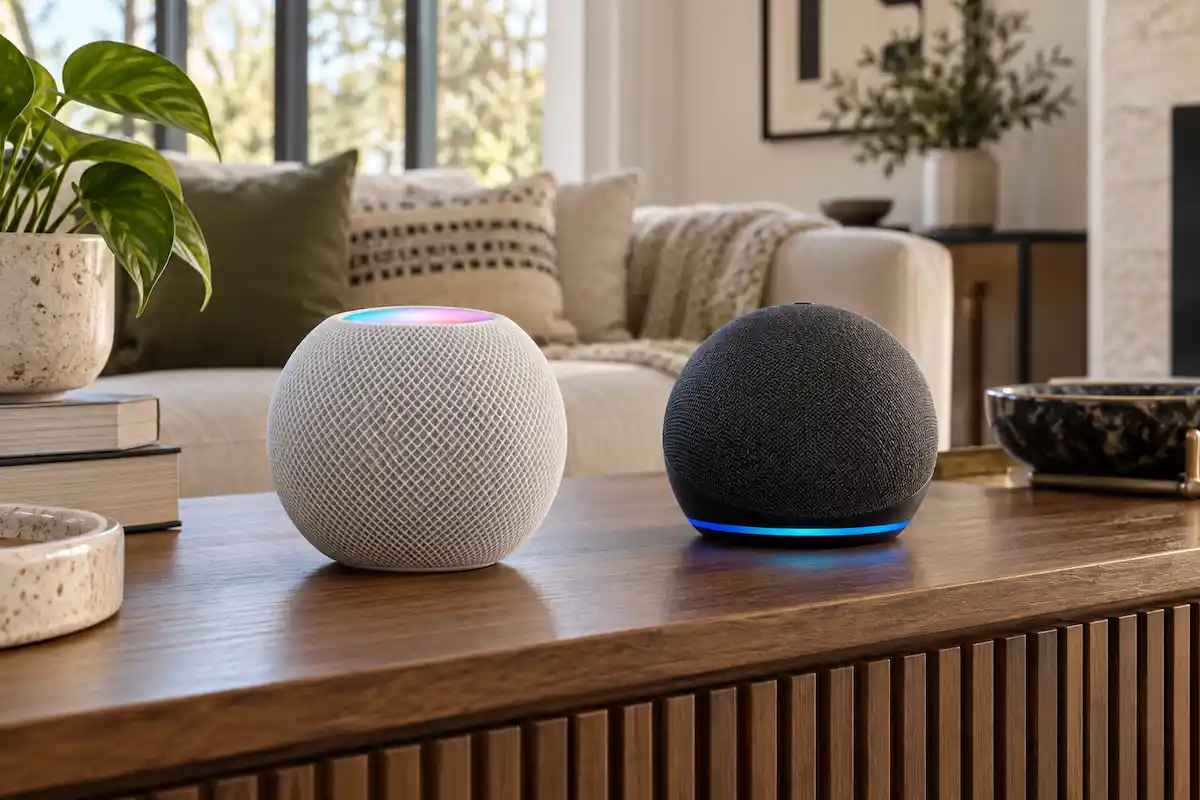
Apple HomePod Mini vs Amazon Echo Dot compares compact spherical smart speakers intended for bedrooms, kitchens, desks, and secondary rooms. HomePod mini uses a full-range driver, dual passive radiators, a custom waveguide, computational audio, Siri, AirPlay, Thread, and an Ultra Wideband chip. Echo Dot uses Alexa, dual-band Wi-Fi, Bluetooth, a front-firing speaker, and Amazon’s broad skills and device ecosystem.
This comparison identifies the exact Echo Dot generation because Amazon specifications differ across generations and special editions. It uses official technical information and avoids claiming a subjective listening winner without controlled evaluation. Voice features, services, languages, and smart-home functions change over time, so confirm current availability for your country and account.
Quick Answer
In the Apple HomePod Mini vs Amazon Echo Dot comparison, choose HomePod mini if your household uses iPhone, Apple Music, AirPlay, Apple Home, and Thread devices, and you value its 360-degree acoustic design, UWB handoff, and temperature/humidity sensors. To compare more Amazon options, see our Amazon Echo Studio vs Apple HomePod guide. Choose Echo Dot (5th gen) if you want Alexa, Android-friendly setup, broad skills, Bluetooth flexibility, and a generally lower-cost route into voice control. HomePod mini is the cohesive Apple choice; Echo Dot is the flexible value choice.
Comparison Table
| Feature | Apple HomePod mini | Amazon Echo Dot (5th generation) |
|---|---|---|
| Assistant | Siri | Alexa |
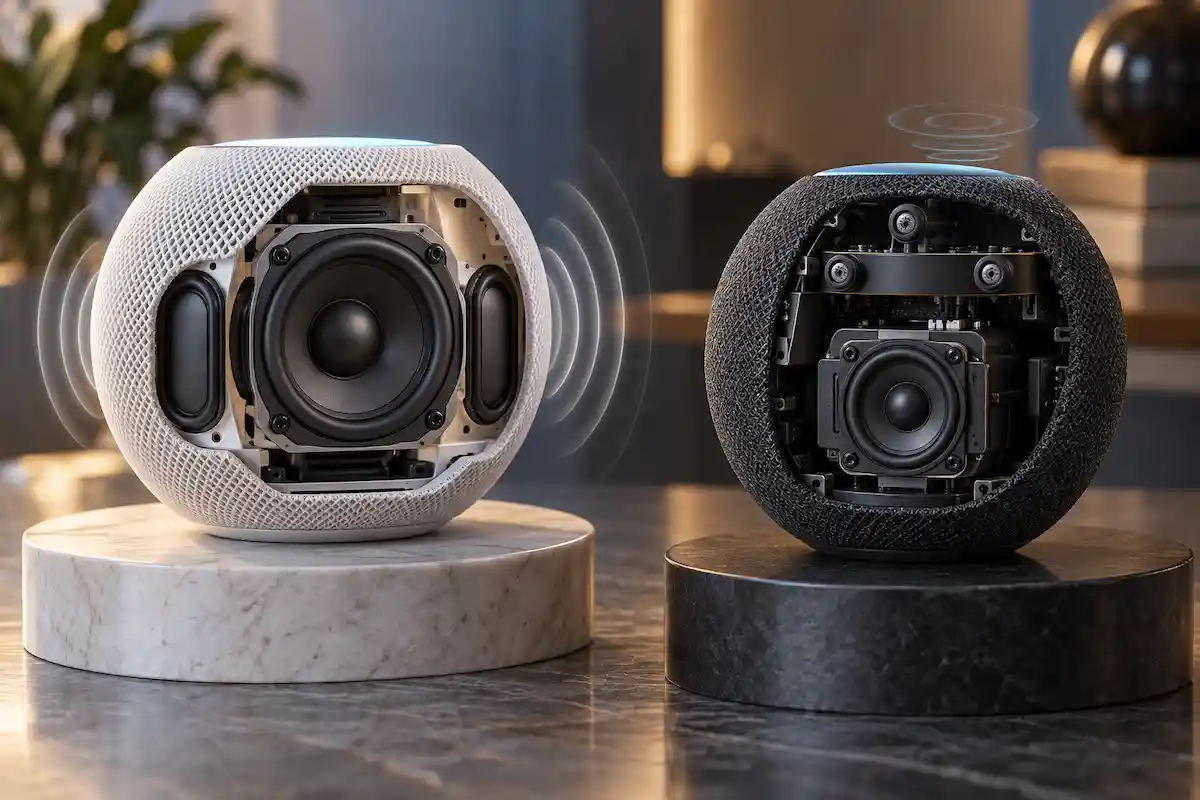
| Audio | Full-range driver, dual passive radiators, 360° waveguide | Single front-firing speaker |
| Microphones | Four-microphone design | Far-field microphones with mic-off button |
| Wi-Fi | 802.11n | Dual-band 802.11a/b/g/n/ac |
| Bluetooth | 5.0; not a general Bluetooth speaker workflow | Bluetooth and Bluetooth Low Energy |
| Smart-home radio | Thread networking technology | Check current hub functions for exact Echo Dot version |
| Sensors | Temperature and humidity | Generation-specific sensors and tap controls; verify SKU |
| Phone ecosystem | Requires compatible iPhone or iPad for setup | Alexa app on iOS and Android |
Apple HomePod Mini vs Amazon Echo Dot: Key Differences
Apple lock-in versus platform reach
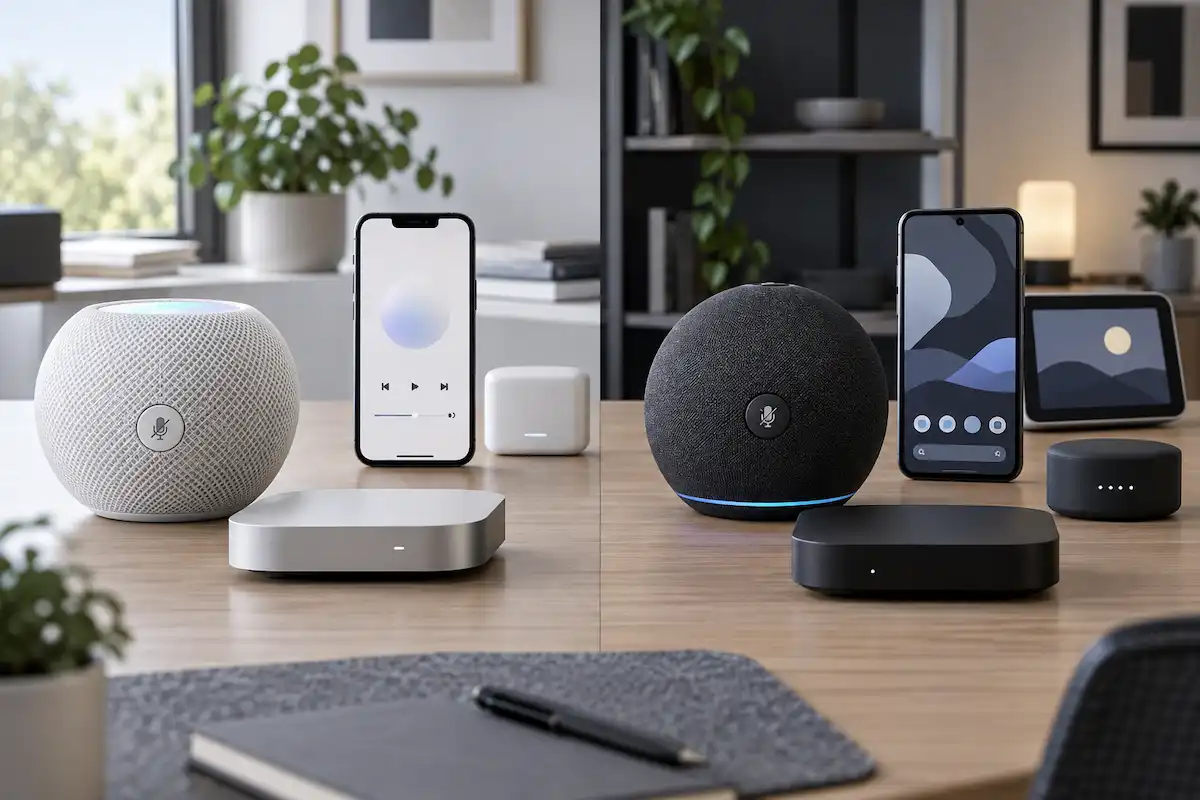
HomePod mini setup requires a compatible iPhone or iPad and works most naturally with Apple accounts, Apple Music, AirPlay, and Apple Home. Echo Dot uses the Alexa app on iOS and Android and supports a wide range of third-party skills and devices. Apple’s tighter integration can be simpler for an all-Apple family; Alexa can be more accommodating when phones and services are mixed.
Audio architecture
HomePod mini uses a full-range driver, two passive radiators, computational tuning, and a waveguide that distributes sound around the enclosure. Echo Dot uses a front-firing speaker in a similarly compact body. Those designs create different placement needs: HomePod mini can sit centrally, while Echo Dot should face the listening area. Neither should be expected to equal a larger premium speaker for deep bass or high-volume rooms. Audio architecture is a central distinction in Apple HomePod Mini vs Amazon Echo Dot.
Streaming methods
HomePod mini is centered on direct supported services and AirPlay from Apple devices. Its Bluetooth radio supports platform functions but Apple does not present the product as a conventional Bluetooth audio speaker. Echo Dot supports Bluetooth audio connections alongside Alexa services. Android users wanting simple phone-to-speaker playback generally have the clearer route with Echo Dot; Apple users may prefer AirPlay’s multiroom integration.
Smart-home network role
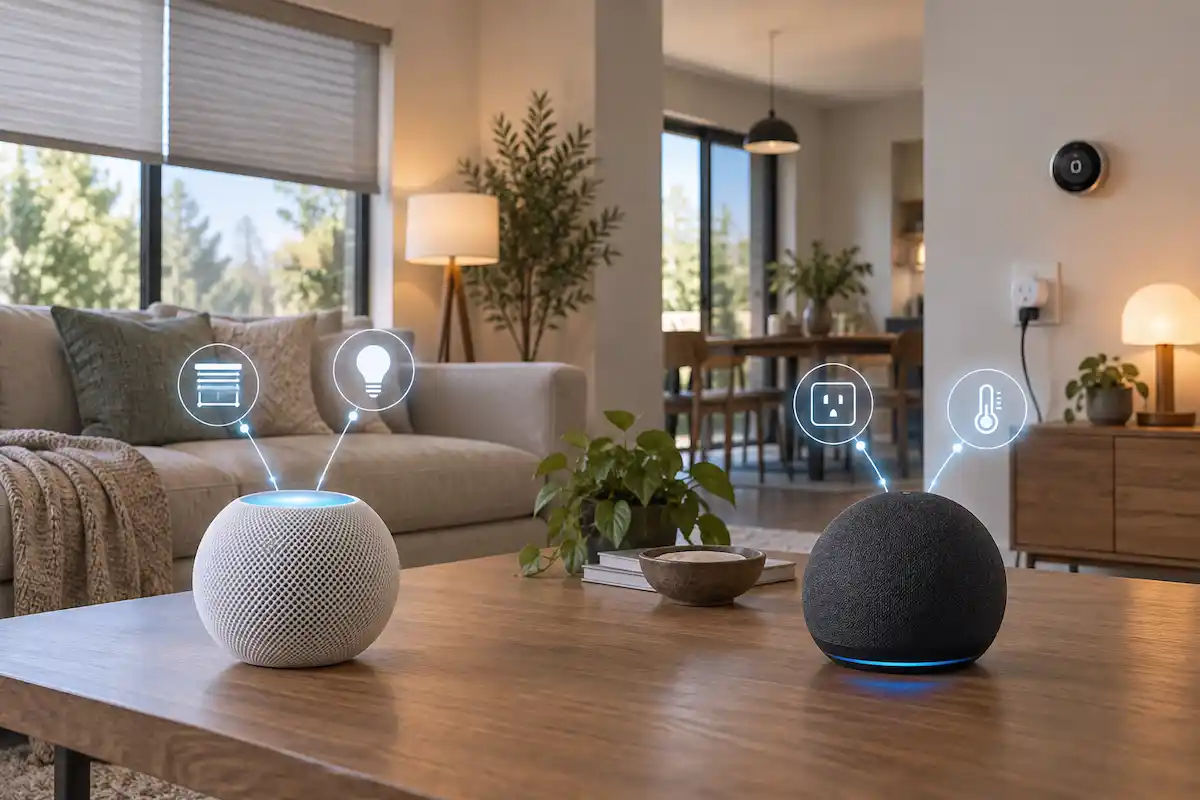
HomePod mini includes Thread networking and can serve Apple Home infrastructure for compatible devices. Echo Dot capabilities vary by generation; the fifth-generation Dot should not be confused with larger Echo models that may include different hub radios. Both can control many cloud-connected devices by voice. Verify whether the exact accessory needs Matter, Thread, Zigbee, Wi-Fi, or a separate manufacturer bridge.
Major Features Compared
Voice assistants
Siri handles Apple-focused personal requests, home commands, timers, messages, and Intercom within supported settings. Alexa offers extensive skills, shopping and information functions, routines, and smart-device integrations. Personal results require careful voice-profile and account configuration on either platform. Households should review purchasing controls, child profiles, explicit-content settings, drop-in or communication features, and voice-history deletion.
Sensors and safety-related features
HomePod mini includes temperature and humidity sensors and supports recognition of smoke and carbon-monoxide alarm sounds under specified conditions. Echo Dot generation-specific temperature or motion features should be confirmed on the current product page rather than assumed. Supplemental sound recognition never replaces certified alarms. Environmental sensors are useful for comfort automations but should not be treated as calibrated instruments without appropriate verification.
Privacy controls
Echo Dot has a microphone-off button and visible status indicators. HomePod mini provides Siri and microphone controls through Apple’s interface and account settings. Both operate within cloud-connected service ecosystems. Review stored voice activity, human review options, personal results, household access, and communication features. For a different Amazon matchup, take a look at Amazon Echo Dot Max vs Sonos Era 100. Place the device where everyone understands when it is active, and use the available mute control when conversations require privacy.
Multiroom and stereo use
HomePod mini supports AirPlay multiroom playback and stereo pairs with another matching HomePod mini. Echo Dot can join compatible Alexa speaker groups and pair under Amazon’s supported configurations. Pairing two small speakers can improve separation but does not transform driver size. Confirm television-audio compatibility separately, because platform rules may require specific streaming hardware and supported speaker models.
How to Choose for Your Home
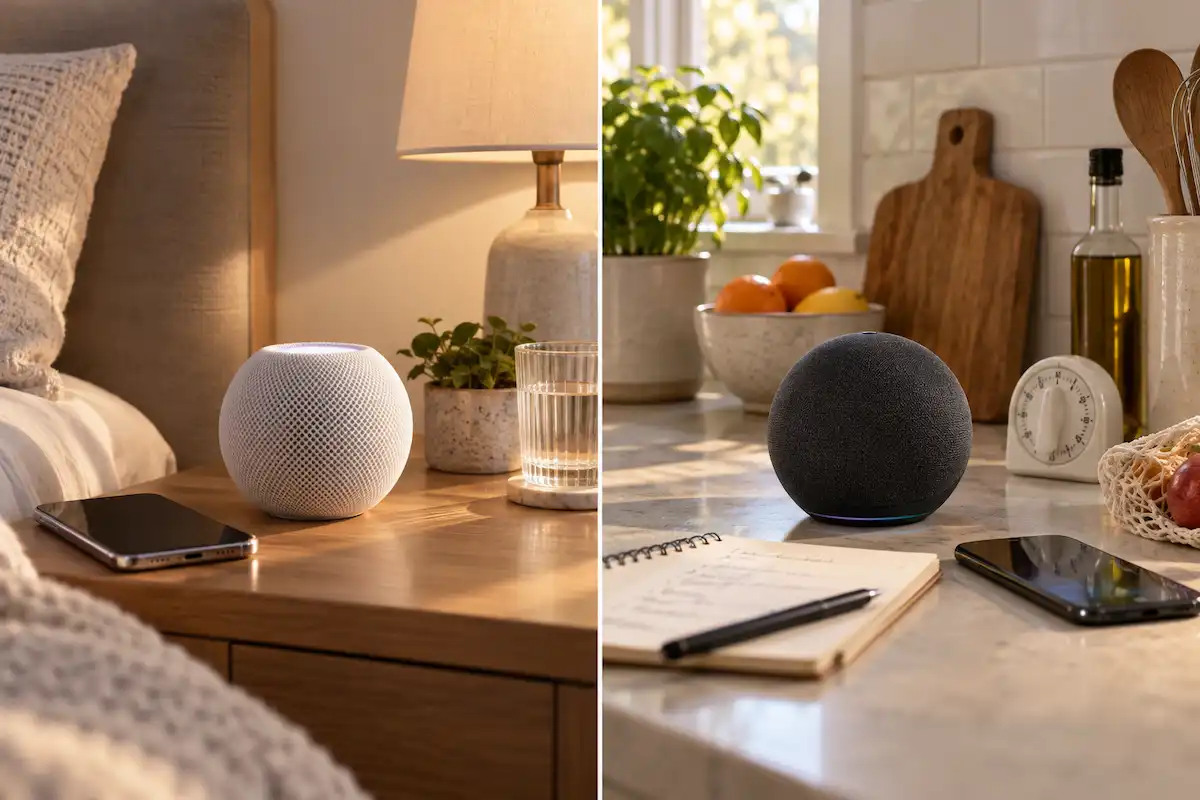
When weighing Apple HomePod Mini vs Amazon Echo Dot, rank three needs: audio quality, assistant capability, and smart-home role. Confirm the music services each platform can start directly, whether casting or Bluetooth is available, and what a paid subscription adds. Check which household phones can complete setup, how personal results and voice profiles work, and whether microphone mute physically disconnects hardware. For stereo or television use, confirm that the exact models can pair in the intended configuration. Smart assistants and generative features evolve through software, so buy for useful functions available now. A speaker placed away from walls at a practical listening height usually has a better chance of performing as designed.
Who Apple HomePod mini Is Best For
HomePod mini is best for households already committed to Apple devices and Apple Home. It offers an elegant combination of AirPlay, Thread, sensors, and a carefully integrated compact audio design.
- iPhone and iPad households.
- Apple Music and AirPlay users.
- Apple Home setups needing Thread infrastructure.
- Rooms where temperature and humidity automations are useful.
Who Amazon Echo Dot (5th generation) Is Best For
Echo Dot is best for buyers seeking an inexpensive and broadly compatible Alexa endpoint. Our Google Home Speaker vs Apple HomePod comparison offers another perspective on Apple products. Its support for Android setup, Bluetooth audio, and Amazon’s skill ecosystem makes it adaptable across mixed-device households.
- Alexa homes and mixed Android/iPhone households.
- Users wanting straightforward Bluetooth playback.
- Rooms that need timers, routines, and voice control at low cost.
- Households already using Amazon services and communication features.
Frequently Asked Questions
The following Apple HomePod Mini vs Amazon Echo Dot questions cover streaming, generations, stereo pairing, Matter, alarms, and phone support.
Can HomePod mini play Bluetooth audio from Android?
Apple does not position HomePod mini as a general Bluetooth speaker. Its normal streaming workflow uses supported services and AirPlay from Apple devices, making it a poor fit for Android-only playback.
Which Echo Dot is compared here?
The fifth-generation Echo Dot, model family documented by Amazon. Do not transfer specifications from Echo Pop, Echo, Echo Dot Max, or other generations.
Do both support stereo pairs?
Both ecosystems support pairing under their own rules, generally with matching models. A HomePod mini and Echo Dot cannot form a cross-platform stereo pair.
Which is better for Matter devices?
HomePod mini includes Thread and Apple Home hub functions. Echo support depends on the exact generation and current Alexa software. Check each Matter device’s required controller and border router.
Can either speaker replace an alarm?
No. Sound recognition or notifications are supplemental. Maintain certified smoke and carbon-monoxide alarms according to local requirements.
Which works better with an iPhone?
HomePod mini offers the deepest iPhone integration, including AirPlay and UWB-assisted handoff. Echo Dot still works with the Alexa iOS app and may be preferable if the household is centered on Alexa.
Final Comparison Summary
Apple HomePod Mini vs Amazon Echo Dot comes down to cohesive Apple integration versus flexible Alexa value. HomePod mini is the stronger small speaker for Apple households, combining Siri, AirPlay, Thread, UWB handoff, sensors, and a 360-degree acoustic design. Echo Dot (5th gen) is the more platform-flexible and value-oriented Alexa endpoint, especially for Android or Bluetooth users. Choose based on phones, music services, and smart-home architecture before comparing minor hardware details. The best compact speaker is the one every household member can reliably control.