Introduction
Bose Portable Smart Speaker vs Sonos Move 2 is a useful comparison because both products pursue the same job with different hardware and ecosystem assumptions. Both move between Wi-Fi multiroom listening at home and Bluetooth playback away from the network. Bose is smaller and lighter with 360-degree sound; Sonos Move 2 is a larger stereo speaker with much longer published battery life, tougher weather protection, and deeper Sonos-room integration.
This buying guide uses current US manufacturer specifications and support material; it does not claim personal testing. Published battery, detection, suction, brightness, and coverage figures depend on settings and conditions. Confirm the exact model, included accessories, firmware, and subscription terms before ordering.
Quick Answer
Choose Bose Portable Smart Speaker if lower weight, a compact handle, 360-degree presentation, Google Assistant support, and Bose multiroom compatibility matter most. Choose Sonos Move 2 if fuller stereo output, up to 24 hours of published battery life, IP56 resistance, automatic Trueplay tuning, AirPlay 2, and the Sonos ecosystem justify the larger body and higher carry weight. Bose is easier to move around a home. Sonos is the more capable single-speaker music system, but Move 2 does not support Google Assistant, and neither should be left exposed to submersion or severe weather.
Comparison Table
| Feature | Bose Portable Smart Speaker | Sonos Move 2 |
|---|---|---|
| Sound design | Omnidirectional/360-degree presentation | Stereo design with two tweeters and one midwoofer |
| Published battery | Up to about 12 hours | Up to 24 hours |
| Weather resistance | IPX4 | IP56 |
| Wireless | Wi-Fi, Bluetooth, AirPlay 2 | Wi-Fi 6, Bluetooth 5.3, AirPlay 2 |
| Voice | Alexa and Google Assistant | Sonos Voice Control and Alexa |
| Room tuning | Bose processing and placement-dependent sound | Automatic Trueplay |
| Wired expansion | Charging cradle/USB power | USB-C adapters for line-in or Ethernet |
| Portability | Smaller and lighter | Larger, about 6.6 pounds |
Design / Hardware
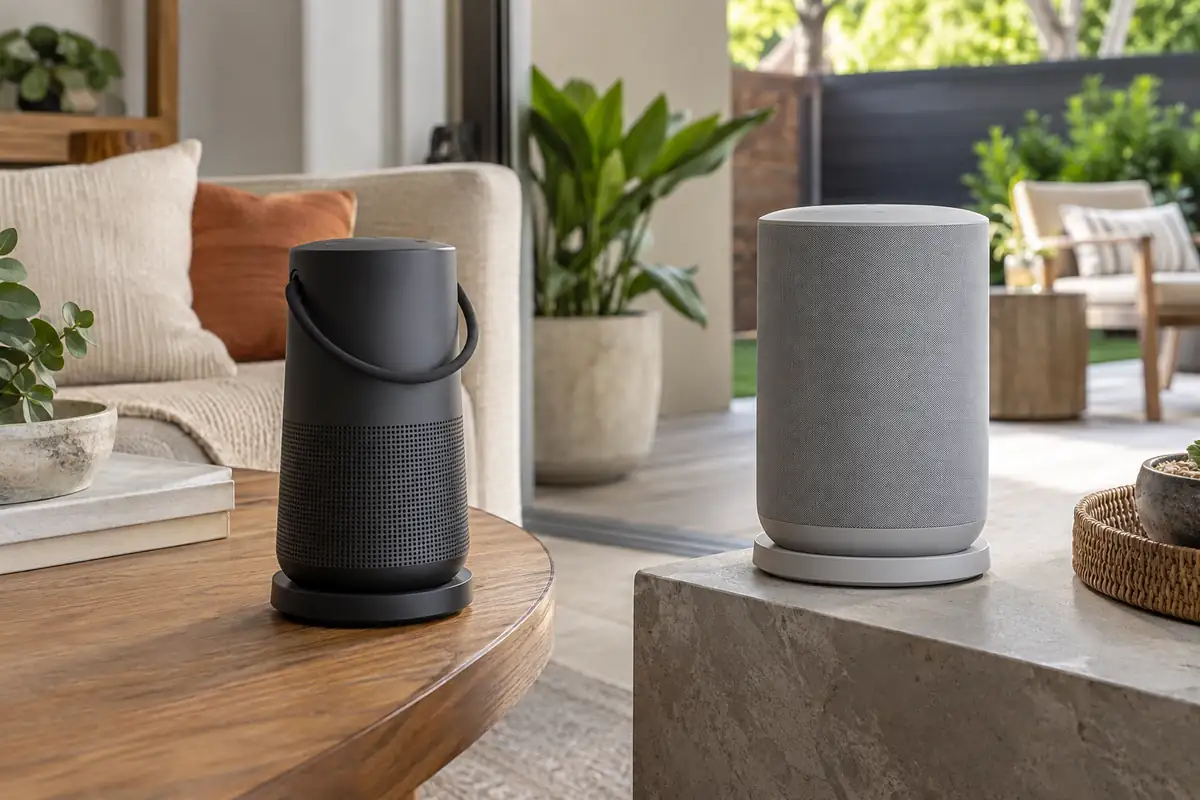
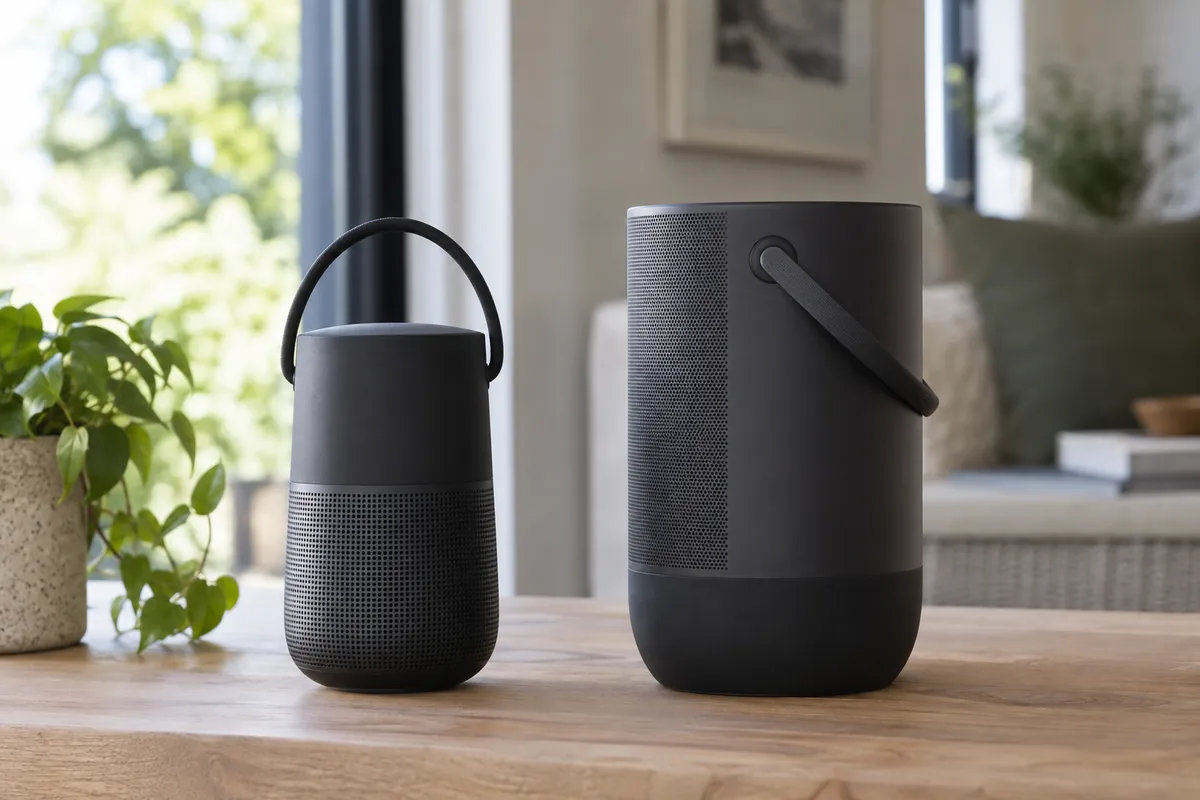
Bose uses a cylindrical body with a fabric-and-aluminum exterior and an integrated handle. It is compact enough to carry from kitchen to patio with one hand, and the 360-degree radiation pattern works naturally near the center of a room. Sonos Move 2 is wider, taller, and roughly 6.6 pounds, with a recessed rear handle and charging ring base. It looks and behaves more like a substantial home speaker that can travel than a portable speaker carried all day. To compare more Sonos options, see our Amazon Echo Dot Max vs Sonos Era 100 guide. Its IP56 rating offers stronger dust and water resistance than Bose’s IPX4 splash rating, but neither is waterproof for a pool. Leave space around either enclosure, keep charging contacts dry, and avoid corners that exaggerate bass.
Performance
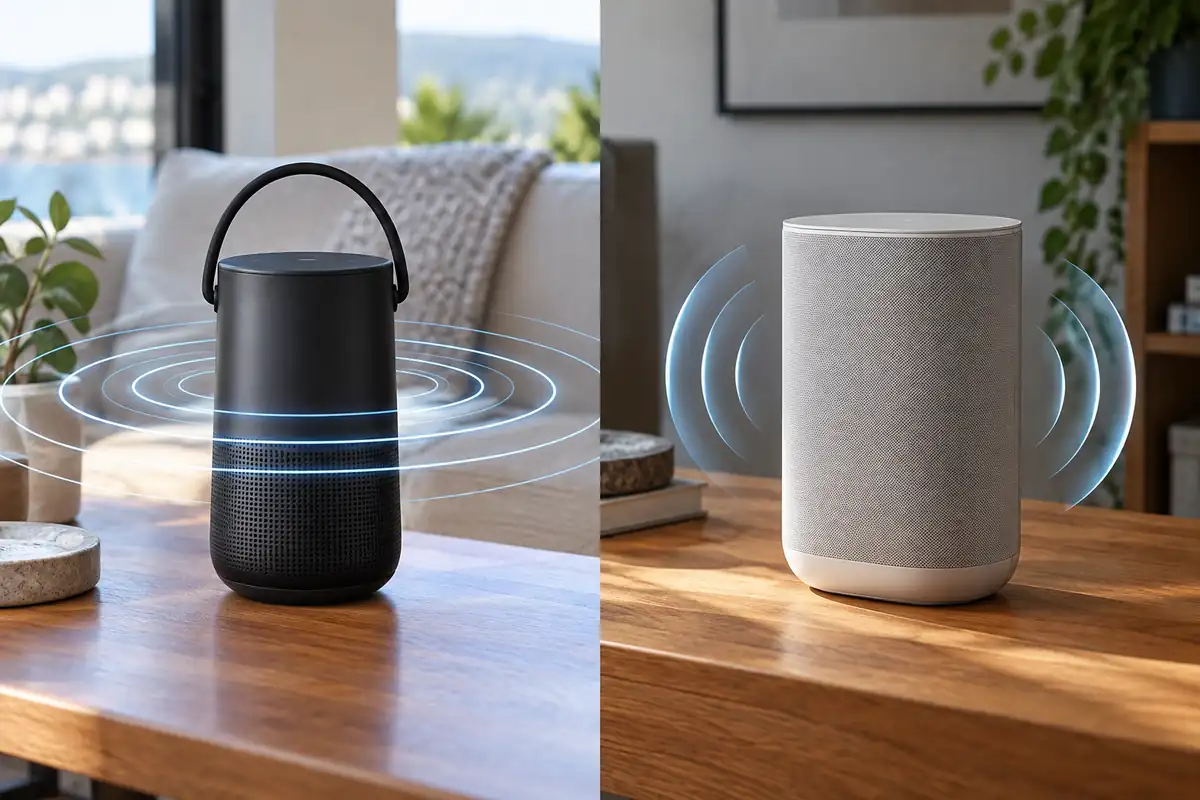
Bose aims for broad, consistent coverage rather than sharply separated left and right channels from one cabinet. Its sound can be engaging for casual listening as people move around the room, but a single unit cannot create the width of separated speakers. Move 2 uses two angled tweeters and a midwoofer for a stereo presentation with greater scale and low-frequency authority.
Automatic Trueplay adjusts Sonos sound as placement changes, while Bose relies on its own processing and user tone controls. Published battery life favors Sonos at up to 24 hours versus roughly 12 for Bose, but volume, bass content, wireless mode, temperature, voice use, and battery age affect both. Audio quality is subjective; room placement and preferred listening level matter more than a power number.
Smart Features
On Wi-Fi, both can stream directly, join compatible same-brand speakers, respond to voice, and support AirPlay 2. Bose offers Alexa and Google Assistant on the speaker, an advantage for homes committed to Google’s voice ecosystem. Move 2 supports Sonos Voice Control and Alexa but not Google Assistant. On Bluetooth, both work as direct phone speakers, though multiroom, voice, and service-specific features may be reduced. Sonos can share some Bluetooth input with grouped Sonos rooms under supported conditions. Neither product is a universal smart-home hub; confirm the exact lights, thermostats, music services, and commands you expect before choosing by assistant name.
App Experience
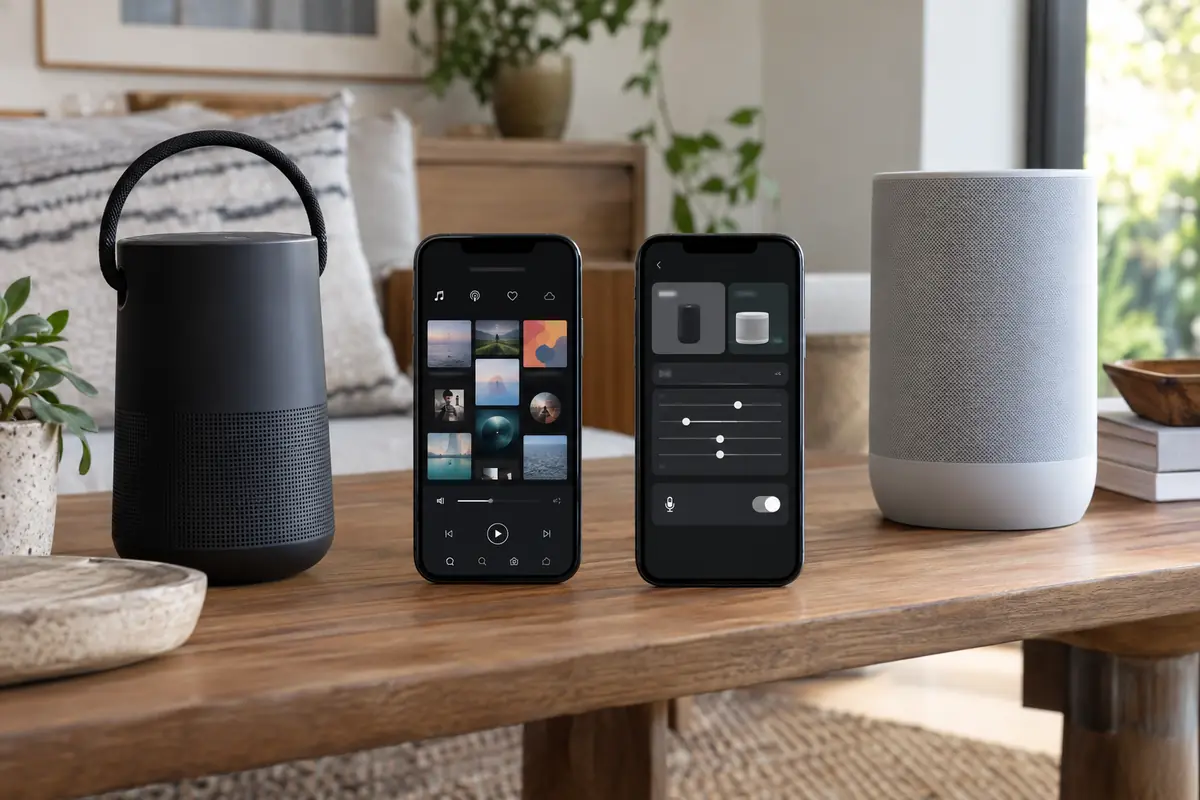
Bose Music manages Wi-Fi setup, presets, services, grouping with compatible Bose products, updates, and tone controls. The Sonos app manages a mature multiroom system, service search, groups, alarms, Trueplay behavior, EQ, line-in routing, and updates. Sonos offers more depth for a whole-home audio build, but buyers should verify that their preferred music service and phone platform behave as expected. Bluetooth remains a useful fallback for services not integrated directly. Test household account switching, explicit-content controls, and what guests can play without receiving administrator access.
Compatibility / Ecosystem
Bose makes sense in a Bose Smart Speaker or soundbar household, although exact grouping and TV behavior depend on compatible models. Move 2 fits Sonos rooms, can stereo-pair with another Move 2, and can participate in broader Sonos playback. AirPlay 2 allows either to join Apple’s audio path, but AirPlay grouping is not identical to native brand grouping. For a different Sonos matchup, take a look at Google Home Speaker vs Sonos Era 100. Sonos’ optional USB-C line-in and Ethernet adapters add flexibility at extra cost. Neither pairs as a generic Bluetooth surround speaker for any television; TV use follows brand-specific soundbar and home-theater rules.
Privacy / Security
Both have microphones for voice and tuning functions. Bose provides microphone controls, while Move 2 includes a physical rear switch that disconnects microphone hardware in addition to its touch control. Turning microphones off disables relevant voice features and may affect automatic tuning behavior. Voice assistants can send requests to cloud services, so review account history, personal results, purchase permissions, and household voice profiles. Use unique account passwords and remove old linked services. Bluetooth does not automatically make listening private if the speaker remains tied to a shared app account.
Key Differences
Carry weight and scale
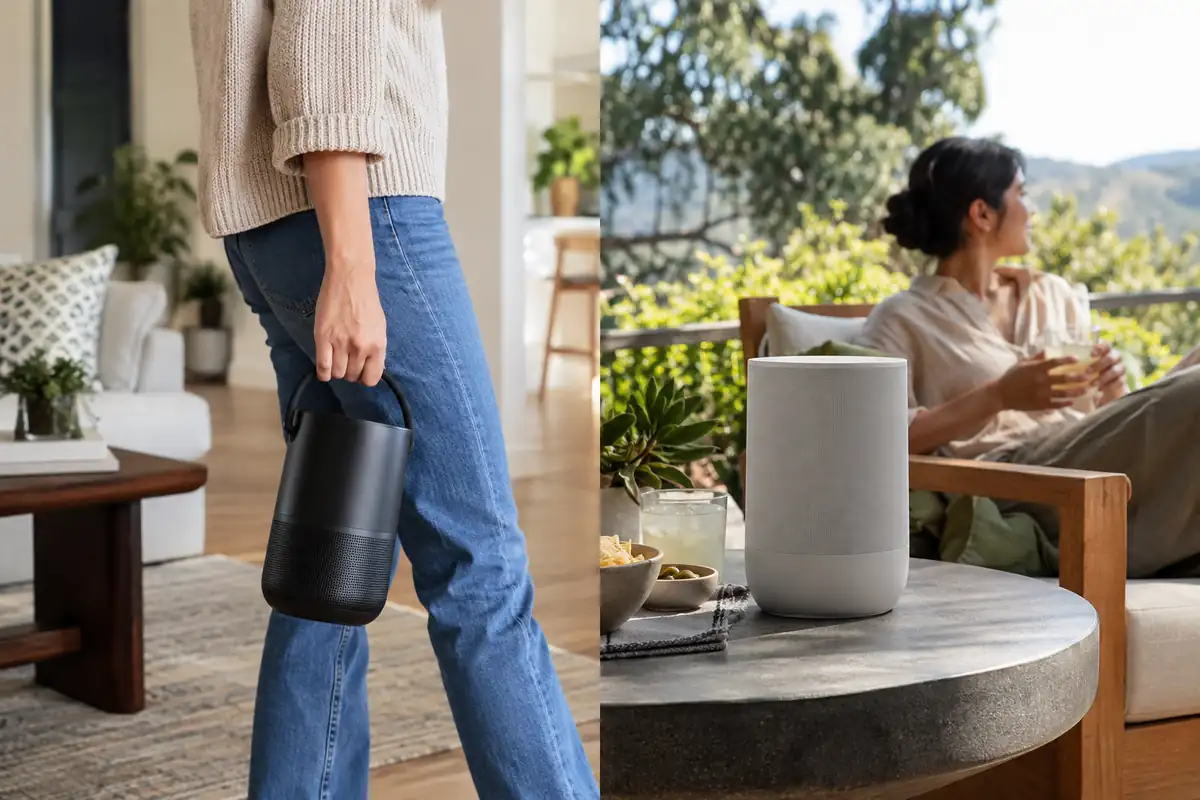
Bose is the easier speaker to move frequently and its 360-degree output suits central placement. Move 2 is heavier but delivers a larger stereo sound. The decision is whether portability means room-to-room carrying or simply freedom from an outlet.
Battery endurance
Sonos publishes up to 24 hours, roughly double Bose’s headline figure. Real endurance depends on use, but Move 2 is the stronger all-day choice. Bose is adequate for shorter patio sessions and returns easily to its optional charging cradle.
Assistant choice
Bose supports both Alexa and Google Assistant. Move 2 offers Alexa and Sonos Voice Control but not Google Assistant. A Google-centered household should not assume Move 2 behaves like older Sonos products that once supported Google’s assistant.
Weather and serviceability
Move 2’s IP56 rating is more robust than Bose’s IPX4, and Sonos designs its battery to be replaceable through a service kit. Our Sonos Era 300 vs Apple HomePod comparison offers another perspective on Sonos products. That favors longer outdoor use and ownership, while Bose wins on smaller size.
Who Bose Portable Smart Speaker Is Best For
Bose Portable Smart Speaker is best suited to buyers with these priorities:
- People who carry a speaker between rooms frequently.
- Google Assistant households that want voice on the speaker.
- Listeners who like broad 360-degree coverage.
- Existing compatible Bose multiroom or soundbar users.
Who Sonos Move 2 Is Best For
Sonos Move 2 is the better match in these situations:
- Buyers who want stronger stereo sound from one portable cabinet.
- Long patio sessions that benefit from a 24-hour battery claim.
- Existing Sonos homes using native grouping and services.
- Users who value IP56 protection and a hardware microphone switch.
FAQ
Does Sonos Move 2 support Google Assistant?
No. Move 2 supports Sonos Voice Control and Alexa, subject to region and service availability. Google Assistant households should choose another control path or consider Bose if on-speaker Google voice is essential.
Can either speaker stay outside permanently?
They are portable, weather-resistant products, not permanent outdoor fixtures. IP ratings do not cover every condition, and charging contacts, extreme temperatures, theft, and long-term UV exposure remain concerns. Bring them indoors after use.
Can I make a stereo pair?
Both brands support stereo pairing with a compatible matching model in their native ecosystem. A stereo pair normally depends on Wi-Fi and same-model rules; it is not the same as connecting two arbitrary Bluetooth speakers.
Which is louder?
Sonos Move 2’s larger cabinet and drivers are intended for greater scale, but loudness specifications do not describe clarity or bass at a chosen level. Room size, placement, source, EQ, and listening distance affect the result.
Do they work without Wi-Fi?
Yes, Bluetooth supports direct playback away from Wi-Fi. Multiroom grouping, direct service streaming, updates, AirPlay, voice assistants, and app features can require Wi-Fi and internet access.
Can Move 2 connect to a turntable?
It can accept line-in through the appropriate Sonos USB-C adapter and suitable source output. The adapter is separate, and a turntable without a built-in phono preamp needs one. Bose does not offer the same simple headline line-in path.
Final Summary
Bose Portable Smart Speaker is the better truly portable smart speaker: it is smaller, lighter, spreads sound in every direction, and supports both major assistants. Sonos Move 2 is the better portable home speaker, delivering a larger stereo presentation, twice the published battery duration, stronger IP56 protection, automatic tuning, and deep Sonos integration. Choose Bose for frequent carrying and Google Assistant. Choose Sonos for sound scale, all-day endurance, and whole-home audio. Before buying, confirm the voice service, music subscriptions, grouping rules, and charging location that the household will actually use.