Introduction
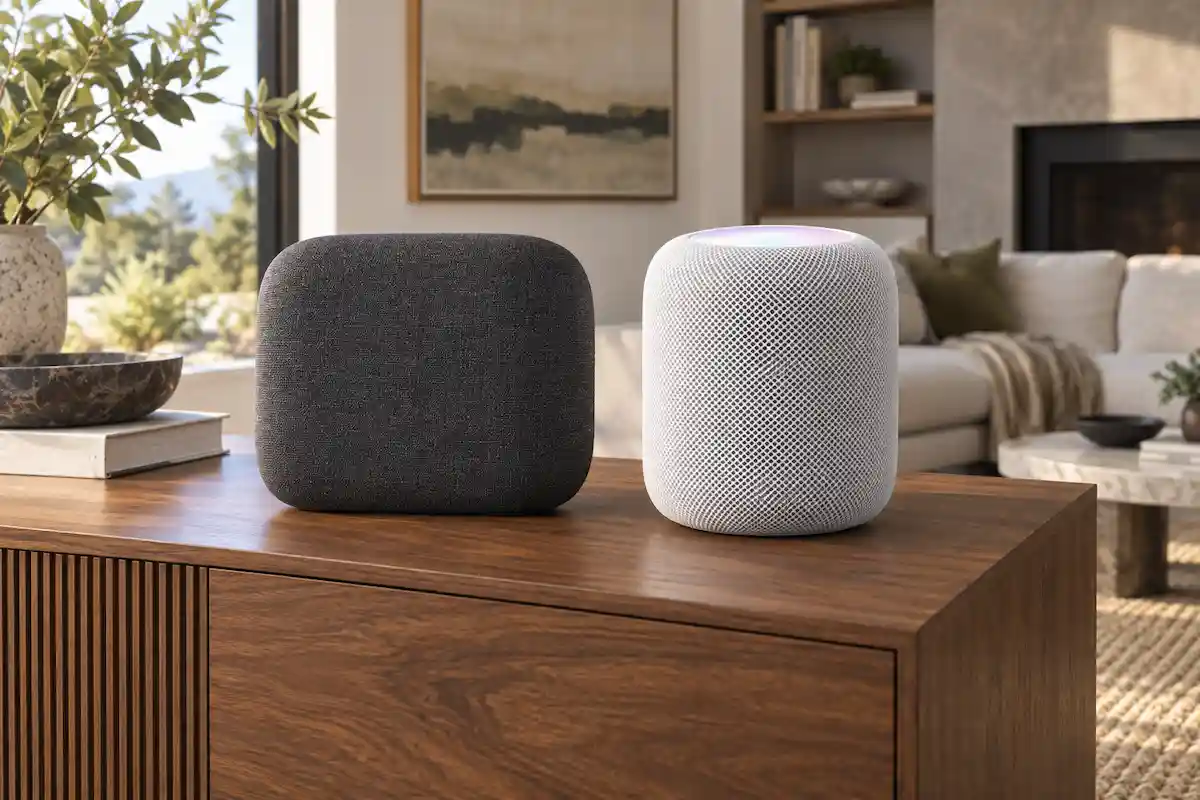
Google Home Speaker vs Apple HomePod compares two speakers that target different priorities. Google’s 2026 speaker is compact and built around Gemini for Home, with a 58 mm full-range driver, Wi-Fi 6, Bluetooth 5.4, Matter hub functions, and a Thread 1.3 border router. HomePod is a much larger audio product with a 4-inch high-excursion woofer, five tweeters, room sensing, Spatial Audio, and deep integration with Apple devices and services.
This is therefore not only Gemini versus Siri. It is also an affordable assistant-first speaker versus a premium music-first hub. Some Gemini capabilities require Google Home Premium, while Apple service behavior can depend on subscriptions and region. The comparison uses current official specifications and does not claim subjective listening tests. Confirm music-service, language, and feature availability for your household.
Quick Answer
In the Google Home Speaker vs Apple HomePod comparison, choose Google Home Speaker if conversational Gemini, Google Home, Wi-Fi 6, Bluetooth, Matter control, and a compact footprint matter more than room-filling audio hardware. For another comparison featuring Apple HomePod, see Amazon Echo Studio vs Apple HomePod. Choose HomePod (2nd generation) if you use Apple devices and prioritize its woofer/tweeter array, room sensing, Dolby Atmos Spatial Audio, AirPlay, temperature and humidity sensors, and Apple Home integration. Google is the assistant-value choice; HomePod is the premium Apple audio choice.
Comparison Table
| Feature | Google Home Speaker | Apple HomePod (2nd generation) |
|---|---|---|
| Assistant | Gemini for Home | Siri |
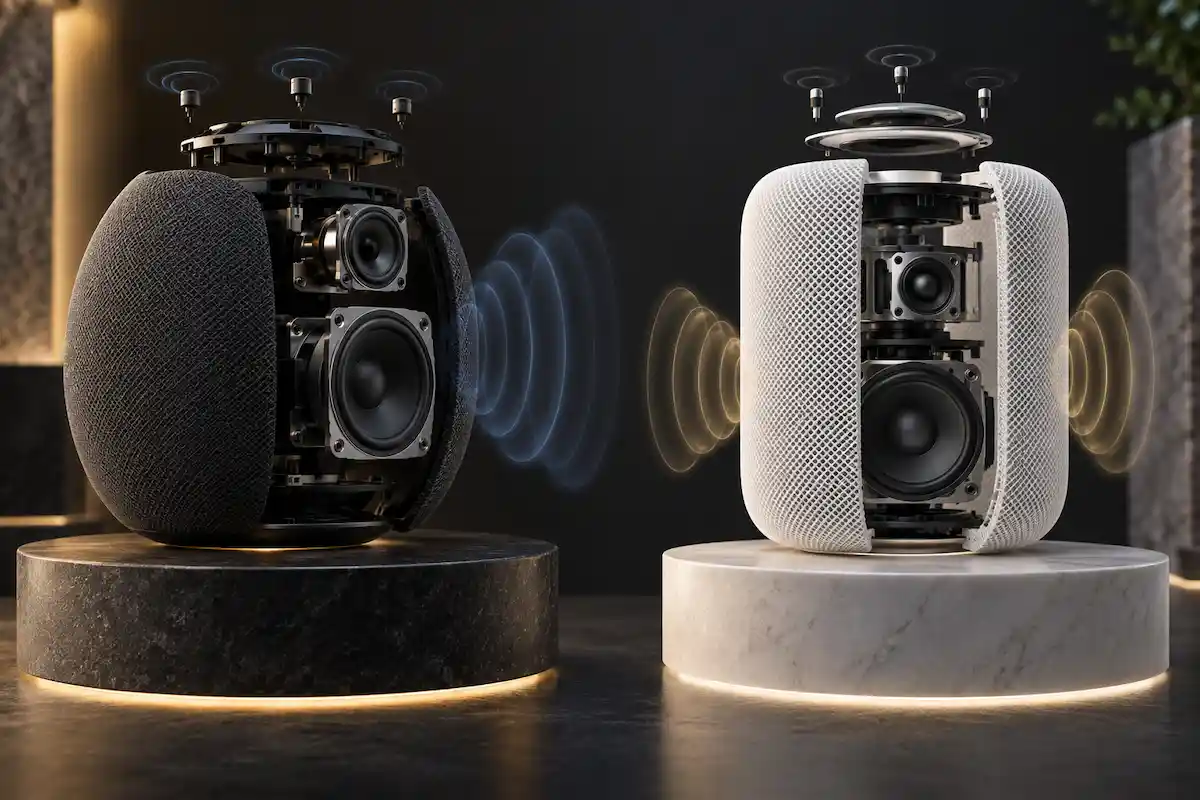
| Audio hardware | 58 mm full-range driver, omnidirectional design | 4-inch woofer and five horn-loaded tweeters |
| Microphones | Three far-field microphones | Four-microphone far-field design |
| Wireless | Wi-Fi 6 and Bluetooth 5.4 | 802.11n Wi-Fi, Bluetooth 5.0, AirPlay |
| Smart-home role | Matter hub and Thread 1.3 border router | Apple Home hub and Thread support |
| Sensors | Capacitive touch areas | Temperature, humidity, and accelerometer |
| Size | 3.4 in high × 4.2 in diameter | 6.6 in high × 5.6 in wide |
| Best fit | Google/Gemini homes | Apple/HomeKit and music-focused homes |
Google Home Speaker vs Apple HomePod: Key Differences
Gemini conversation versus Siri integration
Google Home Speaker is designed for the newer Gemini for Home voice experience, including more natural follow-ups and contextual conversation. Google separates included functions from paid Google Home Premium features such as Gemini Live and more advanced automation help. Siri is less centered on open-ended conversation but integrates with Apple Home, personal requests, Intercom, timers, and Apple-device workflows. The better assistant depends on whether broad conversational help or predictable Apple actions matter more.
Audio scale
Google uses one 58 mm full-range driver in an omnidirectional arrangement. HomePod uses a 4-inch high-excursion woofer, five individually driven tweeters, a calibration microphone, room sensing, and computational audio. The hardware strongly suggests different output goals, but specifications do not replace listening preference. HomePod supports Spatial Audio with Dolby Atmos for compatible content; Google emphasizes balanced 360-degree sound from a much smaller enclosure. Audio scale is a central distinction in Google Home Speaker vs Apple HomePod.
Phone and service ecosystem
Google Home setup works through the Google Home app on iOS or Android, making it the more phone-neutral option. HomePod requires a compatible iPhone or iPad for setup and is designed around Apple Music, AirPlay, Apple TV, and Apple Home. Third-party services exist on both platforms, but direct voice initiation and default-service support can differ. Check the exact music and podcast services your household uses rather than assuming Bluetooth or casting solves every workflow.
Hardware privacy controls
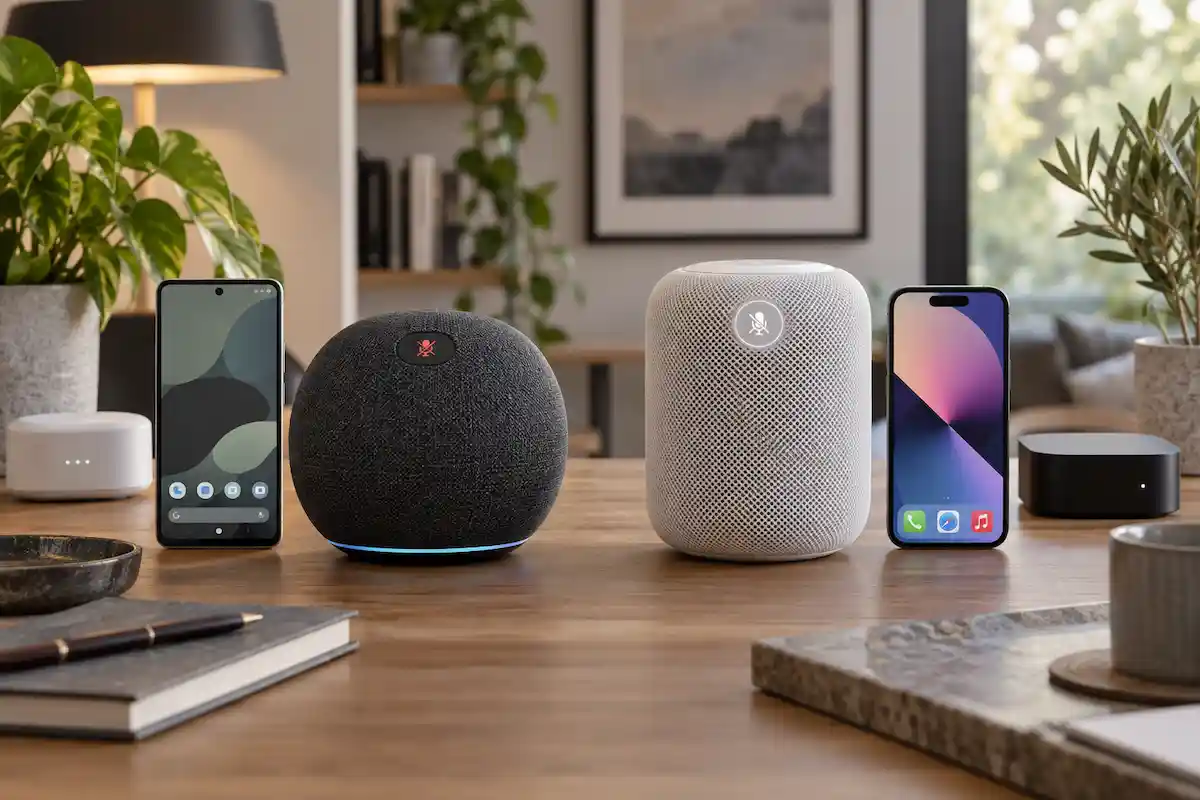
Google lists a two-stage hardware microphone mute switch. HomePod provides microphone and Siri controls through its system and account settings, but Apple’s published specifications do not describe the same rear physical switch. Both assistants process requests within broader account ecosystems. Review voice-history controls, personal results, guest behavior, child settings, and microphone indicators. A mute control is useful only when household members understand its state.
Major Features Compared
Matter and Thread
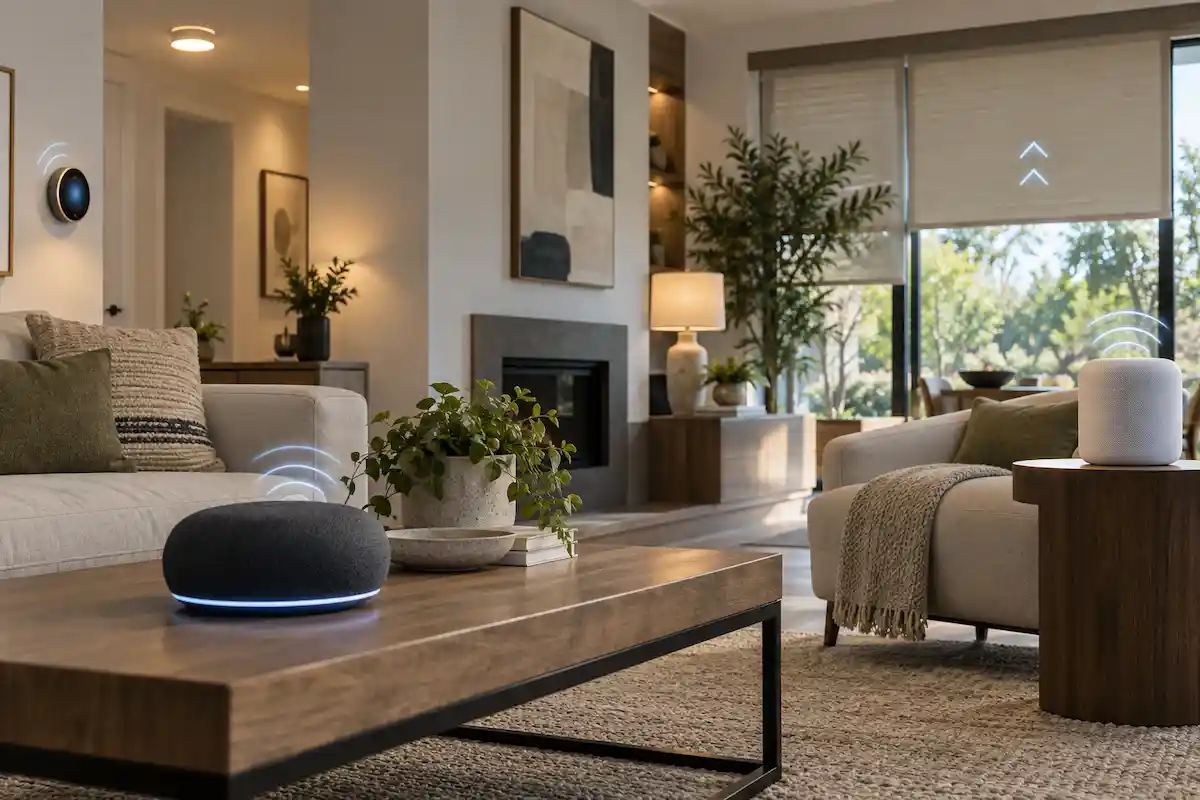
Both can anchor modern smart homes. Google Home Speaker acts as a Matter hub and Thread 1.3 border router. HomePod serves as an Apple Home hub and includes Thread networking technology. Device compatibility still requires correct Matter versions, ecosystem software, and sometimes a manufacturer app. If you already have a border router, the added radio may improve topology but is not automatically a reason to change ecosystems.
Multiroom and stereo
HomePod supports AirPlay multiroom audio and stereo pairing with a compatible matching HomePod. Google Home Speaker participates in Google Home speaker groups and ecosystem playback. Confirm pairing rules before buying two units: vendors generally require matching models for stereo, and television audio functions can have additional hardware requirements. The Sonos Era 300 vs Apple HomePod guide gives Apple HomePod a different point of comparison. Network quality and placement affect synchronization more than the marketing label suggests.
Sensors and home awareness
HomePod includes temperature and humidity sensors and can recognize smoke or carbon-monoxide alarm sounds under supported conditions. Google places advanced sound detection in applicable Google Home Premium offerings rather than listing comparable environmental sensors in the speaker hardware. Neither should replace certified life-safety alarms. Treat recognition as a notification layer and keep primary alarms installed, maintained, and tested according to their instructions.
Subscriptions and long-term value
Google includes core Gemini for Home and offers paid Standard and Advanced tiers for additional capabilities; offers and pricing can change. HomePod works without an Apple Music subscription for smart-home control and AirPlay, but its most seamless music experience aligns with Apple services. Evaluate the five-year cost using the subscriptions you already pay for. A lower-cost speaker paired with a new recurring plan may not remain the less expensive choice.
How to Choose for Your Home
When weighing Google Home Speaker vs Apple HomePod, rank three needs: audio quality, assistant capability, and smart-home role. Confirm the music services each platform can start directly, whether casting or Bluetooth is available, and what a paid subscription adds. Check which household phones can complete setup, how personal results and voice profiles work, and whether microphone mute physically disconnects hardware. For stereo or television use, confirm that the exact models can pair in the intended configuration. Smart assistants and generative features evolve through software, so buy for useful functions available now. A speaker placed away from walls at a practical listening height usually has a better chance of performing as designed.
Who Google Home Speaker Is Best For
Google Home Speaker fits households that want an accessible Gemini endpoint and broad phone compatibility. If Google Home Speaker is on your shortlist, our Google Home Speaker vs Sonos Era 100 comparison is also worth reading. It is particularly practical as a compact smart-home controller in rooms where premium audio output is not the main goal.
- Google Home users who want Gemini conversations.
- Mixed Android and iPhone households.
- Matter homes needing another Thread border router.
- Small rooms where compact size and Bluetooth are useful.
Who Apple HomePod (2nd generation) Is Best For
HomePod fits Apple households that want stronger audio hardware and close integration with Apple Music, AirPlay, Apple TV, and Apple Home. It also adds environmental sensors and room-aware audio processing.
- Apple-only or Apple-first households.
- Listeners prioritizing premium single-speaker music hardware.
- Users wanting Spatial Audio with compatible content.
- Apple Home setups needing a home hub and Thread support.
Frequently Asked Questions
The following Google Home Speaker vs Apple HomePod questions cover subscriptions, setup, audio, smart-home standards, and music services.
Does Google Home Speaker require a subscription?
Core Gemini for Home and basic speaker functions are included, while features such as Gemini Live and advanced automation help may require Google Home Premium. Check current plan terms.
Can Android users set up HomePod?
HomePod’s official setup requirements center on a compatible iPhone or iPad. Android-only households should not assume they can complete normal setup without an Apple device.
Which speaker has better audio hardware?
HomePod has the more substantial published array: a 4-inch woofer and five tweeters. Google uses one 58 mm full-range driver. Sound preference still depends on room, content, and expectations.
Do both support Matter and Thread?
Yes. Google acts as a Matter hub and Thread border router; HomePod acts as an Apple Home hub with Thread. Compatibility depends on current ecosystem and device software.
Can either replace a smoke alarm?
No. Sound recognition can send a supplemental alert, but it does not replace certified, correctly installed smoke or carbon-monoxide alarms.
Which is better for Spotify?
Check current direct voice support in your region. Google may offer more native service flexibility, while HomePod can receive audio through AirPlay. The preferred control method matters as much as catalog availability.
Final Comparison Summary
Google Home Speaker vs Apple HomePod comes down to assistant value versus premium Apple audio. Google Home Speaker is the smarter value for Gemini, Google Home, current wireless radios, Bluetooth, and compact Matter/Thread control. HomePod is the stronger premium audio and Apple ecosystem product, with a much larger driver array, room sensing, Spatial Audio, sensors, and AirPlay. Choose the assistant and household platform first, then decide how much audio hardware the room needs. Also include subscription requirements and phone compatibility in the decision rather than comparing purchase price alone.